2015 in Review – What a Year!

Wow. What a year 2015 has been!

It can’t be long till our Lord returns.

As we usher in 2016, lets reflect on some of the tremendous events of this past year, events which remind us of Gods sure word of prophecy:

all subheadings


1 – Egypt discovers a Supergiant gas field.

“He shall stretch forth his hand also upon the countries: and the land of Egypt shall not escape. But he shall have power over the treasures of gold and of silver, and over all the precious things of Egypt” – (Daniel 11)

As one brother aptly described it; “This is huge. It’s almost too perfect. It’s what we have been waiting for.” Why is it so significant? Because in Daniel 11, the King of the North invades Egypt to take her precious gold and silver. Until recently, Egypt didn’t seem to have anything that would be of significant value to Russia, but now they do. Putin, who has a doctorate in the “Exploitation of natural resources of the benefit of the Russian economy” will no doubt be intrigued by this discovery.

Articles: Egypt discovers a Supergiant Gas field

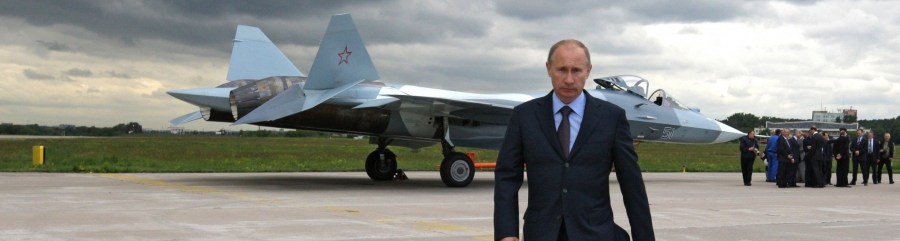
2 – Russia moves into Syria to fight terrorism.

“And I will turn thee back, and put hooks into thy jaws, and I will bring thee forth, and all thine army, horses and horsemen, all of them clothed with all sorts of armour, even a great company with bucklers and shields, all of them handling swords” – (Ezekiel 38)

Ezekiel prophesied (in chapter 38) that Russia would have hooks placed in its jaws, and that it would be dragged down to form a coalition which would eventually come against Israel. There is only one such civilisation infamous for that technique in ancient history, that is, the ancient Assyrian’s. Today, an Assyrian like power – ISIS – have caused Russia to move south and protect its access to international waters.

Articles: “Hooks in Jaws” = ISIS? | Russia acts to protect Tartus

3 – Turkey shoots down a Russian warplane.

“The Ottoman dynasty must of course be driven out of Europe. The occupation of the Dragon’s throne by a non-catholic royalty is clearly exceptional… Hence the Sultan must be ejected that a dynasty patronizing a high priest who forbids to marry may come in. When there for the Czar gets possession of Constantinople he will not be hostile to the Pope.” – (John Thomas, Anatolia)

The decision to shoot down a Russian war-plane has caused grief for Turkey ever since it happened. Russia responded with a range of economic, geopolitical and military measures and threats which have aggravated Turkey and only escalated the rift. Based on Daniel 11 and other sections of scripture, brother Thomas stipulated that at some point Russia would invade Turkey. The resulting aggression between the two belligerents could well be the beginning of such a conflict.

Articles: Why Russia will take Turkey

4 – Russian airliner crashes over Egypt.

“He shall stretch forth his hand also upon the countries: and the land of Egypt shall not escape.” – (Daniel 11)

Daniel 11 shows that the King of the North will “stretch forth his hand also upon the countries: and the land of Egypt shall not escape.” Ever since the airliner crash, Egypt has continued to deny that the crash was a result of terrorist activity and yet Putin strongly affirms that it is. This divergence could become a sore point for Putin.


2015 Review


1 – Nationalism Surges in Europe & Russia.

Given this is a phenomena we expect to result from the spirit of the frogs (Revelation 16), one might say that it would be very convenient for me to pick this phrase out of thin air, however, this is not my observation: STRATFOR – a global intelligence firm noted the resurgence in European nationalism during 2015. Forbes also noted that Russian nationalism is on the rise, and both Putin and the Russia Orthodox Church are directly contributing to this.

Articles: Forbes on Russian Nationalism | STRATFOR on European Nationalism

2 – Israeli / Palestinian Conflict

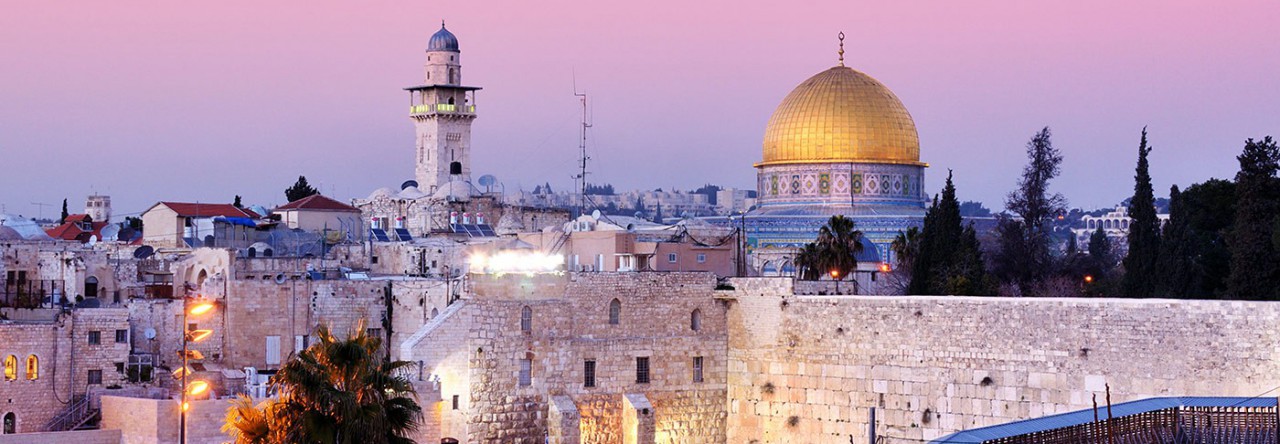
This has been a significant theme since the United Nations summit when Abbas (the Palestinian President) threatened to do something which could be cataclysmic. Around that time, clashes began on the temple mount in Jerusalem and since then the crisis has continued. The United Nations responded by offering to put international troops in Jerusalem to curb the crisis. Zech 12 speaks of a time when Jerusalem will be a “cup of trembling unto all the people round about… and in that day will I make Jerusalem a burdensome stone for all people”. Joel reminds us “behold, in those days, and in that time, when I shall bring again the captivity of Judah and Jerusalem, (our time – the return of Israel back to their land) – I will also gather all nations”. Today, we can see the gathering of nations in Syria, while a few hundred miles south, in Jerusalem, a conflict is brewing.

Articles: UN offer to install peacekeepers in Jerusalem

 3 – Russia seeks global intervention & control (not just Syria)

2015 can be remembered as the year when Putin sought to occupy and/or control not only all territories which belonged to the ancient King of the North (Iraq, Iran, Pakistan, Afghanistan) but also started to re-establish ties with the nations of the coalition of Ezekiel 38; Libya and Sudan (ancient Ethiopia). This is a discreet but significant development, and it is timed with Russia’s move south into Syria. Ezekiel 38 talks about the time when Russia will be dragged south in order to form a coalition, and 2015 seems to be the year in which this has begun.

Articles: Libya seeks Russias military help | Sudan & Russia sign 14 cooperation agreements | Putin seeks to occupy Afghanistan | Iraqi MP’s seek to replace the US with Russia |

4 – Contention/fears around the Golan

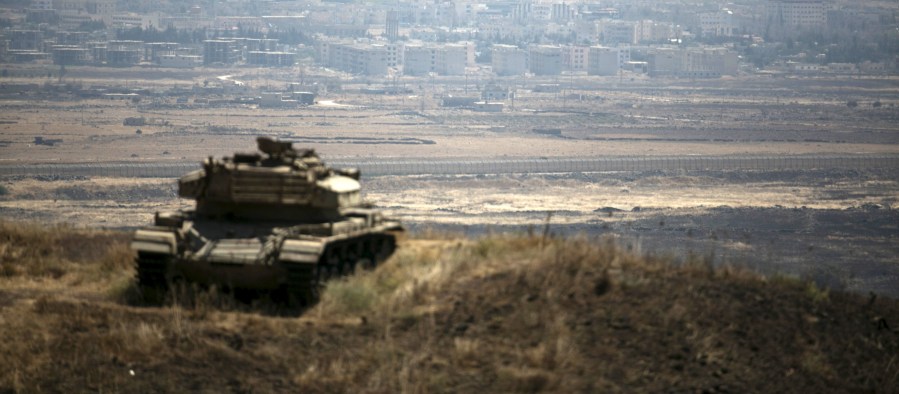
Debka reports that Israel is extremely nervous about Russian operations on its Golan border. The Golan heights is contested territory with the majority of the international community including Russia asserting that the heights belong to Syria. Infact a few months ago, Russia joined in on international condemnation of Israel for its continued occupation. The discovery of large amounts of oil on the Golan has only exacerbated fears of a conflict. Read about the unfolding story here:

Article: This is what could cause Russia to invade Israel

5 – A Looming Financial Crisis

Numerous predictions by mainstream economic experts of a looming financial crisis. 2015 saw a historical global stock-market hiccup in August when the Dow Jones dropped over 1000 points – the biggest intra-day point drop in history. Since then, the World bank, and other leading global banks have warned of impending global defaults which could contribute to a huge financial crisis. Our lord reminds us in Luke 17, that just before the return of Christ, general prosperity will be widespread. “Likewise also as it was in the days of Lot; they did eat, they drank, they bought, they sold, they planted, they builded; But the same day that Lot went out of Sodom it rained fire and brimstone from heaven, and destroyed them all: Even thus shall it be in the day when the Son of man is revealed.” 

Articles: Warnings from the World Bank | Gundlach: “something is very wrong with the world”


Even so, come, Lord Jesus.


To follow coverage of current events for 2016 (if our Lord has not returned) follow our Facebook page at Facebook.com/WatchYeTherefore. This blog will also continue to cover major events and themes relating to prophecy, as they happen during the year.

Russia and the West Collide

This article is part of a series authored by STRATFOR – a geopolitical intelligence firm that provides strategic analysis and forecasting. For other articles by STRATFOR click here.


Summary

Since its emergence as an organized state, Russia has collided with the West. For over a millennium, the two have clashed economically, politically and militarily, using the countries that form the buffer between them as a staging ground for their rivalry.

With Ukraine’s Euromaidan uprising and Russia’s subsequent annexation of Crimea in March 2014, the long-standing conflict has been renewed. But just as the end of the Cold War did not resolve hostilities between Russia and the West, neither will a resolution to the Ukrainian crisis erase the fundamental imperatives that have pitted the two against each other for more than a thousand years.

Analysis

The Russia-West divide began when the kingdom of Kievan Rus, the Slavic precursor to the modern Russian state, arose in Eastern Europe in the ninth century. With territory stretching from the Baltic Sea to the Black Sea, Kievan Rus was one of medieval Europe’s largest states. Toward the end of the 10th century, the kingdom adopted Orthodox Christianity as its official religion, opening a rift between itself and its Catholic neighbors in Western Europe and laying the groundwork for future contention between East and West.

A few centuries later, the Mongols invaded and destroyed Kievan Rus, and the state’s center of power shifted from Kiev to Moscow. The city became the heart of the Grand Duchy of Muscovy, a rising Orthodox and Slavic power that amassed its strength and territory during the 14th and 15th centuries. Meanwhile, Kiev (and much of modern-day Ukraine) became part of Catholic Poland and Lithuania, forging a lasting bond with the West.

The Rise of the Russian State

The Grand Duchy of Muscovy continued to expand and transform, first into the Tsardom of Russia in the 16th century and then into the Russian Empire by the early 18th century. Few geographic barriers stood between it and mainland Europe except vast and empty plains. And so, the empire extended its borders westward, vying with Poland, Sweden and Austria for territory in Eastern and Central Europe. By the start of the 19th century, Russia had become as powerful as many of Europe’s strongest states.

But the lack of geographic barriers surrounding it also made the Russian Empire vulnerable. It needed to create space between itself and other formidable powers, and it did so by spreading its influence in the territories on its periphery. The empire gradually and systematically took control of Siberia, the Caucasus and Central Asia. This brought the Russians into both contact and conflict with Muslim and Asiatic powers such as the Ottomans and Persians, as well as the European powers that held substantial sway in those territories, giving rise to great-power rivalries like the Great Game. As Russia evolved, so did its rivalry with Europe.

Then, at the start of the 20th century, something changed. The United States emerged on the international stage as a new global power, and the dynamics of the Russia-Europe conflict shifted. For the first time, a power that was not of the region played a significant role in its politics, first in World War I and then again in World War II. The competition between Russia and the West became an international one whose significance extended well beyond its geographic borders.

By the end of World War II, Russia’s influence on the Continent had spread farther than ever, reaching as far west as Berlin. In response, the West formed a new strategy to halt the Soviet Union’s spread: containment. Spearheaded by the United States, the strategy applied not only to Russia’s presence in Europe but also to its activities around the globe. The competition took on global proportions during the Cold War, with its participants divided into two diametrically opposed political and military blocs: the Warsaw Pact and NATO.

The Past 25 Years: A Rivalry Revived

Although the collapse of the Soviet Union in the early 1990s marked the end of the Cold War, it did not signal an end to the broader dispute between Russia and the West. At first, though, all evidence seemed to point to the contrary: Talk arose of incorporating Russia into Europe and the Western alliance, and it even appeared to be feasible. Moscow had lost its Eurasian empire, and the new Russian Federation had embraced democracy and capitalism, at least initially.

But the transition proved so chaotic and painful for Russia that, within a decade, the state began to recentralize power as Boris Yeltsin left the presidency and Vladimir Putin assumed it. The 1990s, celebrated by the United States and Western Europe as a golden age of Russian economic growth and democracy, were lamented by Russian leaders and much of the public as a catastrophe.

In its weakened state, Russia no longer needed to be actively and overtly contained by the West, and tensions between the two tapered off temporarily. However, the geopolitical imperative underpinning the United States’ containment policy — blocking the rise of regional hegemons on the Eurasian landmass that could challenge the Western alliance structure — never disappeared. Thus, NATO and the European Union continued to expand. Meanwhile, Russia recovered and Putin consolidated his power. The Kremlin worked to regain its position in the former Soviet periphery. On a rising tide of high energy prices and political stability, Russia began to re-emerge as a regional power.

Russia’s resurgence reignited the conflict between it and the West. The two fought for the allegiance of states in the former Soviet periphery, most clearly in the 2008 Russo-Georgian War, when Russia invaded Georgia after it and Ukraine attempted to join the Western alliance structure, particularly NATO. The European Union responded by launching the Eastern Partnership program in 2009, with the goal of strengthening economic and political ties with former Soviet states. In 2010, Russia countered with its own integration program, the Customs Union.

The rival blocs sought to attract countries in the Eurasian borderlands, perhaps the most contested of which was Ukraine. When, in November 2013, Kiev refused to sign an EU association agreement, the cornerstone of the Eastern Partnership program, protests erupted that ultimately transformed into the Euromaidan revolution of 2014. The situation quickly deteriorated, as Russia annexed Crimea and lent its support to the pro-Russia rebellion in Ukraine’s east.

Since then, hostilities between Russia and the West have intensified, reaching levels not seen since the Cold War. With a proxy conflict in Ukraine, Western sanctions and Russian countersanctions, and military buildups on both sides, it is clear that the Russia-West confrontation has once again come to a head.

The Next 25 Years: Same Conflict, Different Shape

Less clear is the shape that the Russia-West confrontation will take in the coming years. The geopolitical imperatives that form the conflict’s foundations will remain intact, as will the cultural differences that have spurred their competition in the Eurasian borderlands. But many changes are on the horizon as well, some of which could shift the balance of power in the West’s favor.

One such change is the massive demographic shift that is underway in Russia, Europe and the former Soviet periphery. By 2050, U.N. demographic projections expect Russia’s population to decline from 143 million to 129 million, a loss of nearly 10 percent. The West, by comparison, has a more favorable outlook: The United States’ population will grow by over 20 percent, from 322 million to 389 million, while Europe’s largest countries will end up somewhere in between Russia and the United States over the same period. Germany’s population will shrink by 7 percent, from 81 million to 75 million; France’s population will grow by 11 percent, from 64 million to 71 million; and the United Kingdom’s population will rise by 15 percent, from 65 million to 75 million. Each of these trends will shape the economic and military standing of their respective countries over the next 25 years.

Consequently, Russia’s ability to challenge the West by projecting its economic and military power will likely decline in the coming decades. Of course, demographic growth does not directly equate to the projection of power, and the West (particularly Europe) will experience challenges stemming from immigration and high non-European birth rates. Still, Russia’s relatively steep demographic plunge can be expected to undermine its ability to influence its former Soviet neighbors. This will only become truer with each year that passes since the Soviet Union’s collapse, as the social and cultural bonds that tie Russia to its periphery continue to weaken.

This is not to say Russia’s influence in the Eurasian borderlands will evaporate completely. Russia has been the dominant foreign power in the region for centuries, and its position has withstood serious challenges and periods of dramatic upheaval. Thus, Moscow’s primary challenge in the next 25 years will be to figure out how to maintain its advantage in the former Soviet periphery as its resources decline and the cultural and political ties underpinning its position erode.

The West will likely face its own challenges in the years ahead. A shift toward greater regionalization is already underway in Europe, and it will likely intensify in the next 25 years as groupings of states with shared political and cultural characteristics overtake the Cold War-era institutions of the European Union and, to a lesser extent, NATO. This does not mean the two will collapse entirely. Instead, they will likely be reshaped into more practical and sustainable forms. Nor will it necessarily lead to a power vacuum in Europe that Russia could exploit. In fact, it may allow some European countries to better deter Russian aggression. Nevertheless, the format and manner in which the West can challenge Moscow will almost certainly change.

These are the broad strokes that together start to shape the Eurasian borderlands’ future. Though other factors, including technological developments and the emergence of new political ideologies, will no doubt shape the Russia-West confrontation as well, by nature they are more difficult to predict. In this series, Stratfor will explore how the rivalry between Russia and the West has played out in Ukraine, Eastern Europe, the Caucasus and Central Asia prior to and since the collapse of the Soviet Union. We will then forecast how it is likely to change in each region over the next 25 years — a period that is poised to be just as dynamic, as both sides prepare for the sweeping changes ahead.

Lead Analyst: Eugene Chausovsky

This is what could cause Russia to invade Israel

As Russia aims its heavy weapons at Turkey causing the world to watch on in suspense, a scene is playing-out between the two belligerents, one in which the world has little control.

However, what many don’t realise, is that in another part of the world, seeds are being sown for the emergence of an even greater crisis.


It was during the remarkable events of the Six Day war in 1967, that Israel captured the Golan Heights.

After capturing the Golan, the idea was for the Israeli government to use it as bargaining chip for any post-war negotiation, or keep it as a buffer zone to reinforce territorial security against any future Syrian aggression.

golan
Israeli tanks roll into the Golan in 1967

Since then, continued Israeli occupation of the Golan is an arrangement which, in light of recent information, could be a latent catalyst for a Russian invasion.

Its possible that in the very act of seeking security through continued occupation, Israel may have unwittingly guaranteed a future confrontation with Russia.

Unprecedented oil deposits discovered on the Golan

In October, an Israeli energy company – Afek – was drilling around the Golan and discovered unprecedented amounts of oil.

Afek’s Chief Geologist – Dr. Yuval Bartov, said to Israel’s Channel 2 News;

“We are talking about a strata which is 350 meters thick… On average in the world strata are 20-30 meters thick. This is ten times as large as that, so we are talking about significant quantities.”

Just as Israel’s offshore Mediterranean gas discoveries created an entire energy industry, so the Golan oil find could transform Israel into a supplier.

However, while the gas is generally recognised to be within Israeli territory, the oil discovery on the Golan is not.

The disputed sovereignty over the Golan

Since 1967, the international community of nations have only recognised Syrian ownership of the Golan.

Upon publishing news of the Golan discovery, Russian state-owned media was quick to claim that “The region is internationally recognized Syrian territory”.

Until recently, the dispute over Golan sovereignty was largely just a war of words: where the United Nations would pass majority supported resolutions condemning Israel for its occupation, Israel would respond by ignoring any demands to relinquish the territory.

But everything changed in September 2015, when Russia moved into Syria.

Russia suddenly acquired a direct and vested interest in Syrian national and geographic integrity, including, the Golan Heights. From that moment on, an intriguing series of events unfolded.

Israel fails to secure US support

Almost a month after the oil discovery, Netanyahu had a meeting planned with Obama at the White-house.

As part of the meeting, Netanyahu tried to include the question of Golan occupation on the agenda, but it was rejected on the basis that the U.S. position, which objects to Israel annexing the Golan Heights, remains unchanged.

Russia condemns Israel and says the Golan belongs to Syria

A week after Netanyahu’s visit, the question of Golan occupation once again came to the fore when the United Nations voted on a resolution submitted by Syria for Israel to be removed from Golan occupation.

The motion was passed with a strong majority, but most notably, the Russian Federation supported the resolution condemning Israel for its occupation. 

The resolution claimed that Israel’s hold over the Golan Heights, was “a stumbling block in the way of achieving a just, comprehensive​,​ and lasting peace in the region.”

Syria has just asked Russia to develop its oil resources

A week after re-affirming the view of the international community regarding Israels occupation, the Syrian president – Bashar al-Assad – took the opportunity to ask Russia to help develop Syrian oil resources.

At this point, the focus on development is on sea based resources, however this could change if it becomes apparent that the Golan offers low cost extraction for high return.

UPDATE: Israel is “very concerned” about Russian activity near the Golan

It has since come to light that the Israeli government is significantly concerned about Russian military activity near the Golan as the motives of the military are unclear.

While the oil discovery rekindles the international debate on Golan sovereignty, Russia continues to support the convenient view that an Israeli occupation of the Golan is a threat to peace in the Middle East.

How far will Russia go to take a spoil under the guise of achieving “peace” in the Middle East?


And thou shalt think an evil thought…
Art thou come to take a spoil?
hast thou gathered thy company to take a prey?
to carry away silver and gold, to take away cattle and goods,
to take a great spoil”
– Ezek 38

Related Articles:

Thanks to Turkey, Russia will now fortify its defences in the Middle East.

What happens when you poke the bear with a stick?

At this point, the Russian Foreign minister has indicated that Russia “does not want to go to war with Turkey”.

HOWEVER, the crisis is far from over – Russia is beginning to hurt Turkey in other ways:

  • Russia’s Foreign Ministry has urged the country’s citizens to defer all travel to Turkey and advised all Russians currently in Turkey to depart as soon as possible.
  • Russia immediately deployed advanced air defence in Syria, placing herself in a far better defensive position from which to launch an invasion in future.
  • Instinctively, Russia begun bombarding Turkmen insurgents, who have ethnic ties to Turkey — ignoring demands made by Turkey over the past week to end its military operations close to the Turkish border.
  • Russia is planning and executing a range of economic sanctions against Turkey.
  • Russia is denying entry to Turkish citizens.
  • The Kremlin has arrested a number of Turkish businessmen in Russia.
  • Russian no longer considers Turkey to be an ally.

Its hard for anyone to see how this situation might de-escalate in the long term especially as this incident seems to be a symptom of a broader historical problem between the Russians and Turks.

Given the trail of prophetic fulfillment over the last few months who knows what might happen next. We await in anticipation!

Related Posts:


Putin threatens a Military Coup in Turkey

As we await a response from Putin, its worth quoting from a previous post regarding the current Russian-Turkish crisis:

On the 3rd of August, it was reported that Putin had threatened Turkeys president and this is what he allegedly said:

“Tell your dictator President he can go to hell along with his ISIS terrorists, I will make Syria a ‘Big Stalingrad for him!”

The source (Moscow Times) was questionable and so when we first published this, the prospect of Russian intervening in Syria was met with skepticism.

However, within a month of this article being published, Putin surprised the world and moved his military into Syria.

On September the 24th, the same source reported that Putin had given another message to the Turkish President, this time, a more direct one:

“If necessary we can stage a swift military coup against you, unless you desist from your desperate acts of supporting the violent Al-Qaeda terrorists.”

And then yesterday happened.

No one knows yet how Putin will choose to respond, but we don’t need to look further past the Chechen war, or the recent bombing of Raqqa (due to the Sinai bombing of the Russian airliner) to know that Putin has a history of heavy-handed responses.

It wouldn’t be too hard for Russia to invade Turkey – Even the US military is worried about Russia’s military capability.