Historic meeting: The Pope to meet the Russian Orthodox Patriarch next week

Wow. This is undoubtedly another prophecy that is coming to pass in our time.

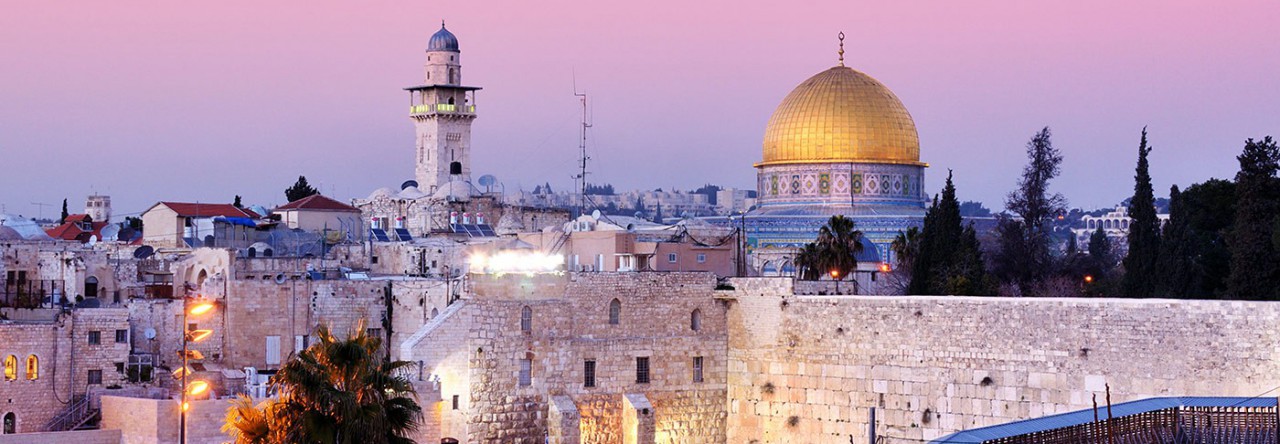
The head of the Russian Orthodox Church, Patriarch Kirill, is to meet his Roman Catholic counterpart, Pope Francis, during a historic visit to Latin America. The ground breaking meeting is to happen in mid-February in Cuba.

The meeting between heads the two major Christian churches would be an unprecedented move to mend a millennium-long rift between the Western and Eastern branches of the religion, which started with the Great Schism of 1054.

Persecution of Christians in the modern world is the main issue for the two leaders to discuss, the Russian Orthodox Church said. Christians are among the minorities suffering at the hands of groups adhering to radical Islamist ideology in places like Iraq, Syria and Somalia.

“the time is not far off, when the Latin Bishop may have to seek again to the Constantinopolitan Imperial Autocracy for protection.”

~Exposition of Daniel, John Thomas

Brother Thomas was talking about the Catholic Pope seeking the protection of Russia in the face of a mutual challenge, and we already see evidence of this need arising. But is this meeting just an isolated incident, or does it speak of something greater at work?

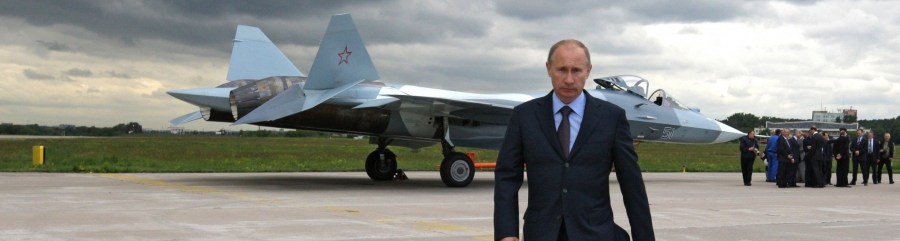
Putin asks his governors to read three books

To understand the context behind this meeting, we need to wind the clock back and cast our gaze upon Putin.

Since 2012, Kremlin observers witnessed a change in Putin who discarded his pragmatist policy and replaced it with an ideological one. Over the course of the next few years and in the lead up to the annexation of Crimea, Putin’s speeches would be peppered with nationalistic references to the writings of Russian historians and philosophers.

Steven Lee Myers, the lead Moscow correspondent for the New York Times, also noted the change in his recent book “The New Tsar”;

…for the first time, he (Putin) began casting his leadership in a broader historical context. He meant to restore something much older, much richer and deeper: the idea of the Russian nation, the imperium of the “third Rome,” charting its own course, indifferent to the imposition of foreign values. It was an old Russian idea, and he found the model for it in the history books he was said to favour.

Not only was Putin’s new ideology evident through his national speeches, but early 2014, Putin distributed three special books to members of the Russia United Party and the regional governors of Russia. The books were to be ‘essential reading’, and they give us much insight into the new ideological direction of the Kremlin.

The first book was written by 19th century Russian philosopher Vladimir Solovyov and was entitled “Justification of Good”. Solovyov was unique amongst his contemporaries as he was one of the only Russian Philosophers to advocate the Hellenist idea of the unification of the Catholic church to the Russian Orthodox church – much to the disgust of the Orthodox clergy. Looking for common ground with Catholicism was anathema in the eyes of the Russian Orthodox Church and it still is today.

So why did Putin distribute Solovyov’s writings to the leaders of Russia when he knew it would irritate the Church? To find the answer to this question, we need to go to the second the book that Putin asked his colleagues to read; “Our Tasks” written by Ivan Ilyin.

Where Solevyov writes about the future role of the Church, Ilyin theorises about the future role of the state. Ilyin’s writings construct and fantasise about a new direction for Russia through the establishment of the imperium of “the Third Rome” – the re-establishment of the Roman/Byzantine Empire.

The idea of a Byzantine revival isnt new; Constantinople – the ancient capital of the Byzantine empire – is a city which features as a centrepiece in Russian fairy tales, poetry, architecture, and religion. Throughout Russian history, many have called for a return to such an empire, but there’s a problem for those Byzantine obsessed Russians; Constantinople isn’t in Russia, its in Turkey. How then can the Russian people revive the Byzantine empire if its ancient capital remains – under the control of Turkey? Perhaps this question may be answered for us if Russia chooses to invade Turkey in the next few months as the Russian-Turkish crisis unfolds.

However, put together, the writings of Solevyov and Ilyin advocate for a new Holy Russia – a Holy empire, which would be founded upon a unified Eastern (Orthodox) and Western (Catholic) Christendom. By distributing these writings, Putin is reaching into the patriotic heart of the Russian and evoking strong feelings of nostalgia as they are reminded of their history, culture, religion and heritage which are from the remnants of the Byzantine empire.

But further than that, it seems that Putin is giving substance to those ideologies and ancient Russian dreams: On one hand, the powerful Byzantine empire is once again on the verge of becoming a possibility as Putin continues to agitate Turkey. On the other hand and probably much to Krills despair and Solevyov’s delight, the unification between Eastern and Western Christendom – a necessary basis for a Holy empire – is beginning to emerge as we have found out today.

But where did this all come from? Why is Putin suddenly giving substance to an old Russian dream?

There is a number of very good reasons and we consider one of them here:

The growing threat of an extremist Muslim Caliphate calls for the unification of Western and Eastern Christendom

It should not be forgotten that it was a Muslim caliphate (the Ottoman empire) that eventually took Constantinople, and ended the Byzantine empire. The Russians have never forgotten this.

Infact, it has been suggested in Russia, that the fall of the Byzantine empire was actually a result of the lack of coordination between the Byzantines (Orthodox) and West (Catholics) in dealing with the threat of the Muslim Caliphate. Fast forward five centuries to 2016, and a new Muslim Caliphate – the Islamic State (ISIS) – is now gaining momentum in the Middle East. Russian commentators use the Byzantine narrative to suggest that Russia is under threat of making the same uncoordinated mistake unless it gets its act together and seeks to unify Western Christendom (the Roman Catholics) with the Eastern (Russian Orthodox).

Today, both the Roman Catholics and Russian Orthodox feel threatened by ISIS. The Vatican especially so, because it doesn’t have an army to defend itself or deploy to places like Syria where Christians are increasingly victimised. This is why in 2014, the Vatican called upon the United Nations to use military force against ISIS. In 2015 we saw Russia respond to that call, sending in its military and proving itself to be a formidable force in Syria.

Putin’s ideological vision for a revived Rome is becoming a reality. Today, the news that the Pope is about to meet his Russian counterpart for the first time to discuss unity in the face of an emerging caliphate reminds us that this revival is fast becoming a reality.

The Roman Iron in Daniels image of chapter 2, and in the Fourth beast of Daniel chapter 7 is emerging, and we are living to witness the fulfilment of prophecy.

Further reading:

Putin allows terrorists onto the Golan border – breaking his promise to Israel

A large Hezbollah force has entered the southern Syrian town of Daraa, a critically dangerous event for Israel’s security.

The way to the town, which lies near the Jordanian border and across from the Israeli Golan, was opened before Hizballah by none other than Russian forces. This was a blatant violation of President Vladimir Putin’s commitments to Prime Minister Binyamin Netanyahu and Jordanian King Abdullah not to permit Iranian and Iran-backed forces, such as Hizballah and Iraqi and Afghani Shiite militias, reach their borders in consequence of Russia’s military intervention in the Syria war.

Daraa is just 32 km from the southern Golan and 12 km from the Jordanian border. Hizballah forces in this town are therefore within easy striking distance from northern Israeli and Jordan.

What happened Wednesday was that a sizeable Hizballah contingent made it into Daraa, the day after a Syrian unit under the command of Russian officers captured the town of Sheikh Maskin, cutting off rebel forces east of Daraa from their comrades to the west. Control of Sheikh Maskin is the key to the crossroads leading to Damascus in the north, the Druze Mountain town of es-Suwaida in the east, and Quneitra on Golan opposite Israel’s northern defenses.

The battle for Sheikh Maskin was the first in the Syrian conflict to be directly fought under Russian command. Its fall sparked accounts of Russian officers commanding Syrian troops in different parts of Syria.

So far, Israel has not reacted to the Hizballah force’s advance, notwithstanding public statements by Prime Minister Binyamin Netanyahu and Defense Minister Moshe Ya’alon that this would never be allowed to happen.

DEBKAfile’s military sources explain this reticence by a persistent misreading of the Syrian crisis in the higher ranks of the Israeli defense establishment. Military Intelligence chief Maj. Gen. Herzl Halevi, who has a good grasp of its complexities, is a lone voice against the defense minister and IDF chief of staff, Lt. Gen. Gady Eisenkot

In Amman, however, King Abdullah and his generals signified both alarm and fury. DEBKAfile’s sources report that Wednesday morning, the king shot off an urgent message to President Putin demanding an explanation for the Russian officers’ action in opening the door of Daraa to hostile Hizballah fighters.

Jordan has fought Hizballah and its conspiracies for three years, ever since its security forces seized an arms cache that Hizballah had smuggled into the kingdom for a terror cell to mount attacks in the northern province of Irbid. Amman is now concerned that Hizballah is close enough to make a grab for Al-Ramtha, the only border crossing between Syria and Jordan. That would be a feather in the cap of Iran’s Lebanese proxy, as the first Arab border crossing to fall to a Hizballah force outside Lebanon, and one, moreover, located athwart a main regional water source, the Yarmouk River.

As of Thursday morning, Jan. 28, Abdullah had not received a reply to his missive from Putin, but a message did come through to Amman from Syrian President Bashar Assad.

Using a back-door intelligence channel, he sent a notice in the name of Gen. Bahjat Suleiman, former Syrian ambassador to Jordan until he was expelled in May 2014, that King Abdullah must now face the consequences of his long support for the rebels of southern Syria.

The monarch was also advised to prepare for the influx of thousands of fleeing rebel fighters whom the combined Syrian and Hizballah forces were pushing towards the Jordanian border.

The next hours will be critical for the development of a similar crisis on the Israel-Syrian border in the Golan region.

The risk of a confrontation on the Golan is already high – click here to find out about the context behind this crisis.

This article was originally published on DEBKA

This is what could cause Russia to invade Israel

As Russia aims its heavy weapons at Turkey causing the world to watch on in suspense, a scene is playing-out between the two belligerents, one in which the world has little control.

However, what many don’t realise, is that in another part of the world, seeds are being sown for the emergence of an even greater crisis.


It was during the remarkable events of the Six Day war in 1967, that Israel captured the Golan Heights.

After capturing the Golan, the idea was for the Israeli government to use it as bargaining chip for any post-war negotiation, or keep it as a buffer zone to reinforce territorial security against any future Syrian aggression.

golan
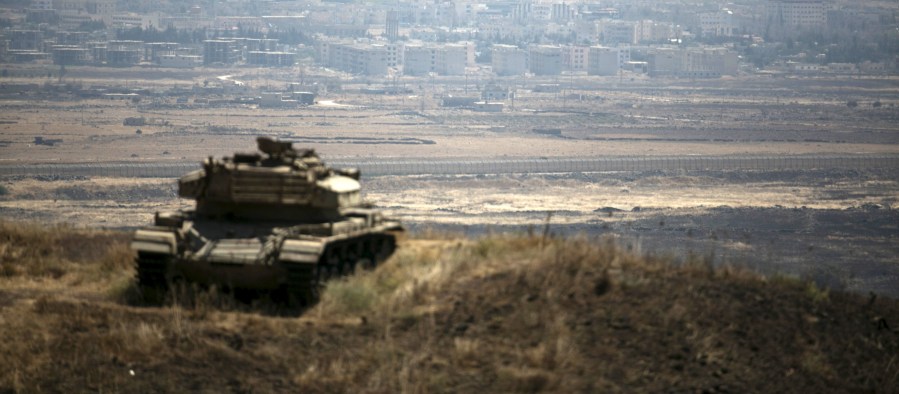
Israeli tanks roll into the Golan in 1967

Since then, continued Israeli occupation of the Golan is an arrangement which, in light of recent information, could be a latent catalyst for a Russian invasion.

Its possible that in the very act of seeking security through continued occupation, Israel may have unwittingly guaranteed a future confrontation with Russia.

Unprecedented oil deposits discovered on the Golan

In October, an Israeli energy company – Afek – was drilling around the Golan and discovered unprecedented amounts of oil.

Afek’s Chief Geologist – Dr. Yuval Bartov, said to Israel’s Channel 2 News;

“We are talking about a strata which is 350 meters thick… On average in the world strata are 20-30 meters thick. This is ten times as large as that, so we are talking about significant quantities.”

Just as Israel’s offshore Mediterranean gas discoveries created an entire energy industry, so the Golan oil find could transform Israel into a supplier.

However, while the gas is generally recognised to be within Israeli territory, the oil discovery on the Golan is not.

The disputed sovereignty over the Golan

Since 1967, the international community of nations have only recognised Syrian ownership of the Golan.

Upon publishing news of the Golan discovery, Russian state-owned media was quick to claim that “The region is internationally recognized Syrian territory”.

Until recently, the dispute over Golan sovereignty was largely just a war of words: where the United Nations would pass majority supported resolutions condemning Israel for its occupation, Israel would respond by ignoring any demands to relinquish the territory.

But everything changed in September 2015, when Russia moved into Syria.

Russia suddenly acquired a direct and vested interest in Syrian national and geographic integrity, including, the Golan Heights. From that moment on, an intriguing series of events unfolded.

Israel fails to secure US support

Almost a month after the oil discovery, Netanyahu had a meeting planned with Obama at the White-house.

As part of the meeting, Netanyahu tried to include the question of Golan occupation on the agenda, but it was rejected on the basis that the U.S. position, which objects to Israel annexing the Golan Heights, remains unchanged.

Russia condemns Israel and says the Golan belongs to Syria

A week after Netanyahu’s visit, the question of Golan occupation once again came to the fore when the United Nations voted on a resolution submitted by Syria for Israel to be removed from Golan occupation.

The motion was passed with a strong majority, but most notably, the Russian Federation supported the resolution condemning Israel for its occupation. 

The resolution claimed that Israel’s hold over the Golan Heights, was “a stumbling block in the way of achieving a just, comprehensive​,​ and lasting peace in the region.”

Syria has just asked Russia to develop its oil resources

A week after re-affirming the view of the international community regarding Israels occupation, the Syrian president – Bashar al-Assad – took the opportunity to ask Russia to help develop Syrian oil resources.

At this point, the focus on development is on sea based resources, however this could change if it becomes apparent that the Golan offers low cost extraction for high return.

UPDATE: Israel is “very concerned” about Russian activity near the Golan

It has since come to light that the Israeli government is significantly concerned about Russian military activity near the Golan as the motives of the military are unclear.

While the oil discovery rekindles the international debate on Golan sovereignty, Russia continues to support the convenient view that an Israeli occupation of the Golan is a threat to peace in the Middle East.

How far will Russia go to take a spoil under the guise of achieving “peace” in the Middle East?


And thou shalt think an evil thought…
Art thou come to take a spoil?
hast thou gathered thy company to take a prey?
to carry away silver and gold, to take away cattle and goods,
to take a great spoil”
– Ezek 38

Related Articles:

Thanks to Turkey, Russia will now fortify its defences in the Middle East.

What happens when you poke the bear with a stick?

At this point, the Russian Foreign minister has indicated that Russia “does not want to go to war with Turkey”.

HOWEVER, the crisis is far from over – Russia is beginning to hurt Turkey in other ways:

  • Russia’s Foreign Ministry has urged the country’s citizens to defer all travel to Turkey and advised all Russians currently in Turkey to depart as soon as possible.
  • Russia immediately deployed advanced air defence in Syria, placing herself in a far better defensive position from which to launch an invasion in future.
  • Instinctively, Russia begun bombarding Turkmen insurgents, who have ethnic ties to Turkey — ignoring demands made by Turkey over the past week to end its military operations close to the Turkish border.
  • Russia is planning and executing a range of economic sanctions against Turkey.
  • Russia is denying entry to Turkish citizens.
  • The Kremlin has arrested a number of Turkish businessmen in Russia.
  • Russian no longer considers Turkey to be an ally.

Its hard for anyone to see how this situation might de-escalate in the long term especially as this incident seems to be a symptom of a broader historical problem between the Russians and Turks.

Given the trail of prophetic fulfillment over the last few months who knows what might happen next. We await in anticipation!

Related Posts:


Putin says there will be “Serious Consequences” as a second Russian aircraft is destroyed in Syria.

So far the shooting down of the Russian warplane in Syria by Turkey is headlines around the world so there is little point us adding to the noise on the blog in detail at this point.

The world is awaiting Putin’s response.

Suffice to say, a running coverage of the news can be seen on our Facebook page: Facebook.com/WatchYeTherefore

Here are some of the main points of the conflict so far:

Rebels shoot a Russian recovery helicopter

As soon as the Russian warplane was shot down, Russian helicopters moved into the hostile territory to try and recover the pilots. One of the helicopters was destroyed by US backed rebels. (Note: the page may need to be refreshed for the video to load)

Putins Response:

Putin responded by saying that Turkey have “stabbed Russia in the back” and there will be “serious consequences for Turkey”

CNN reconstruction:

Live Coverage by Sky News:

Related Articles: