Israel and the X factor in Australian Politics

One of the big winners in the 2016 Federal election in Australia is the Nick Xenophon Team, a political party created by former independent Senator Nick Xenophon.  Mr Xenophon first came to prominence as a fervent campaigner for gambling controls.  Gambling often leads to significant problems for vulnerable people and his stance on the evils associated with gambling appealed to many in the community.

As first a member of the Upper House in the South Australian parliament and later as a senator in Federal parliament, Mr Xenophon expanded his platform by campaigning for a number of populist causes, portraying himself as the champion of the downtrodden and marginalised.  He is a strong advocate of domestic manufacturing and has argued for protection for industries and jobs perceived to be at risk from economic reforms and liberalised trading arrangements.

In the 2016 Federal election Mr Xenophon’s populist policies attracted considerable support and delivered his team several seats in the Federal parliament.  He now has more influence in Canberra than ever before, especially in the light of the tight outcome of the election and the finely balanced numbers in parliament.  Mr Xenophon’s support will be vital if the government is to remain in power and in its efforts to secure support for legislation it wishes to enact.  It must be expected that Mr Xenophon will seek support for causes he holds dear in exchange for his support of the government.

But what does this have to do with Israel?  More than you might have imagined.  While Mr Xenophon’s views on gambling and support for local industries are well known, what is less well-known is his fervent advocacy for the Palestinians in their struggle with Israel.  In August 2014, Mr Xenophon travelled to the Middle East as a guest of the Australian Friends of Palestine Association (AFOPA).  While there, his itinerary involved mainly meetings with Palestinian officials.  His contact with the Israeli side of the conflict was confined mostly to meetings with extremist Israeli groups which are harsh critics of the Israeli government.  Mr Xenophon has donated funds to the AFOPA, an organisation which actively supports the boycotts, divestment and sanctions (BDS) movement which condemns Israel and seeks to isolate the Jewish state from the wider world.

Mr Xenophon was one of the first signatories of what is known as the Canberra Declaration.  This extremely one-sided and poorly-informed document calls for an end to Israel’s occupation of the Palestinian territories and its alleged blockade of Gaza.  His contributions in the Senate have reflected his support for this slanted view of the Israeli-Palestinian dispute.

In the Senate on24 March, 2015, following a meeting he had with the Australia Palestine Advocacy Network (APAN), Mr Xenophon made a speech which was highly critical of Israel, in the course of which he claimed incorrectly that:

Gaza has been living under an Israeli blockade since 2007 when Israel placed massive restrictions over movement of people and goods in and out of Gaza.

In that speech Mr Xenophon did criticise Palestinian forces in Gaza for firing rockets into Israel but his rhetoric was overwhelmingly anti-Israel.  He questioned the proportionality of Israel’s response to the rocket attacks from Gaza, ignoring the fact that this is complicated by Hamas’ policy of using civilian infrastructure and human shields for military purposes.  He also ignored the stringent border restrictions imposed on Gaza by Egypt.  It is likely that the omissions from that speech reflected the slanted information supplied to him by the APAN.

At a Senate committee hearing on 3 June, 2015, Mr Xenophon directly questioned whether recognition of Israel as a Jewish state is consistent with the Australian government’s support for a two-state solution to the Israeli-Palestinian dispute.  In the light of Joel 3, students of prophecy have good reason to be sceptical of the two-state solution.  It should be recognised, however, that when an avowed supporter of the Palestinian side questions the legitimacy of the two-state solution they are really calling into question the concept of a national homeland for the Jews in any form.

On 25 June, 2015, Mr Xenophon addressed the Senate criticising the Attorney-General’s statement that “the description of East Jerusalem as ‘occupied’ … is freighted with pejorative implications, which is neither appropriate nor useful”.  It is clear whose side Senator Xenophon supports in the debate about the status of Jerusalem.  His position may be confirmed by the fact that, on 15 July, 2014, Mr Xenophon co-hosted a forum to mark the tenth anniversary of the International Court of Justice finding that Israel’s settlements in East Jerusalem and the West Bank are illegal.

It is hard to know how many of his colleagues in the Nick Xenophon Team share their leader’s views about Israel and the Palestinians, mainly because he has been very reluctant to allow them to speak for themselves.  It is known, however, that the Team’s lead candidate for the Senate in Victoria, Naomi Halpern, who is Jewish, has used social media to support the description of Israel as “a 68-year-old apartheid state”.

Since its creation as a Jewish state, Israel has enjoyed strong support from Australia.  While the electoral success of Senator Xenophon is unlikely to overturn completely Australia’s support for Israel, the government might be encouraged to tone down its advocacy for the Jewish state.  Ezekiel 38 portrays Tarshish and the young lions as mounting a somewhat muted response to the Gogian host which invades Israel at the time of the end.  One wonders whether the political influence of Senator Xenophon and his colleagues in the new parliament might extend to foreign policy issues affecting Israel and the Middle East.  We cannot be sure, but we may be certain that God is at work influencing the nations in unseen ways to ensure that His plan and purpose is worked out.  Should our Lord’s return be delayed we may watch with interest how the X factor influences Australia’s policy toward the Middle East.
The Biblical Implications of a Brexit

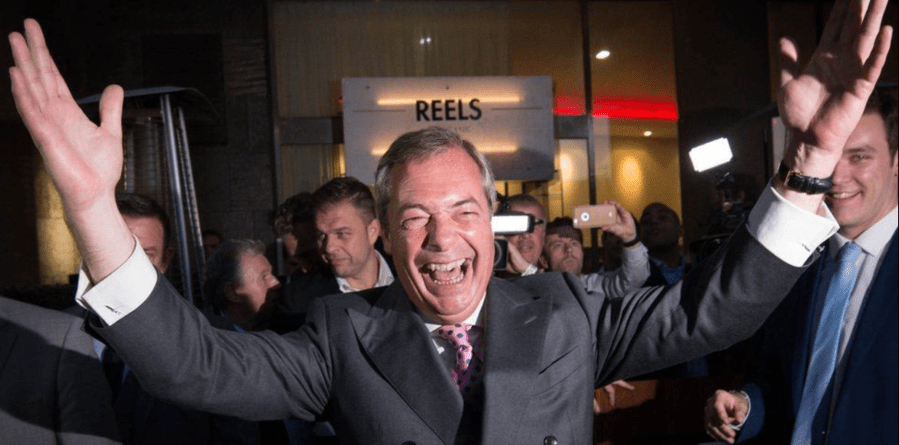
What an amazing day it has been as the angels have worked to revert 71 years of European history to change Europe and ultimately bring about the return of Christ.

On this page, a few videos and links have been added which help explain the result and the Biblical implications.

Overview lecture on the Biblical implications of a Brexit:

Here are some of the updates that came through today as Britain voted on EU membership.

https://youtu.be/8AN6GoqQkvU


Catholicism and Paganism

A large part of the book of Revelation is written about the apostasy and the false prophet and this is particularly so in Rev 16 – 18.

Why does Revelation show how much God and Christ are repulsed by the apostate church? To name a few reasons –

  • pagan like worship
  • its history of child sexual abuse
  • money laundering
  • the politicization of religion

Pagan traditions

Catholic Church makes tradition above or equal to Scripture, but in actuality many of its traditions stem from pagan sun worship. Its teachings, beliefs and practices come from Mithraism—a form of paganism that existed in Babylonian times.

These pagan practices are symbols of apostasy against God. Of this, the Twentieth Century Encyclopedia of Catholicism says the following:

The missionary history of the [Catholic] Church clearly shows her adaptability to all races, all continents, all nations. In her liturgy and her art, in her tradition and the forming of her doctrine, naturally enough she includes Jewish elements, but also elements that are of pagan origin. In certain respects, she has copied her organization from that of the Roman Empire, has preserved and made fruitful the philosophical intuitions of Socrates, Plato and Aristotle, borrowed from both Barbarians and the Byzantine Roman Empire—but always remains herself, thoroughly digesting all elements drawn from external sources…In her laws, her ceremonies, her festivals and her devotions, she makes use of local customs after purifying them and “baptizing” them.

The Papacy claims that its system of worship has been handed down through tradition. They are absolutely correct. But these are not the teachings of Jesus, but rather the traditions of Babylon.

Roman Catholic doctrines such as infant baptism, sprinkling during baptism, teachings on death and immortality, tonsured and celibate priests with power over the dead, prayers to the dead and to relics, repetitive prayers with the use of beads, doctrines on forgiveness of sins, teachings on hell, the mass, and Sunday worship are doctrines actually derived directly from ancient Babylon, not the Bible.

Doctrine Date
The Trinity and the Sunday Sabbath 321-364 AD – Council of Laodicea
Relic Worship 337 AD
Rosary 366 AD
Mass 394 AD
Eternal Torment 590 AD
Indulgences 799 AD
Mary Worship 850 AD
Confessional 1198 AD
Bible Forbidden 1299 AD
Infant Baptism 1311 AD
Tradition Above Scripture 1563 AD

When Constantine married paganism and Christianity, the door was opened for false doctrines to creep into the early Christian Church, and they were gradually introduced into the system. The Church became divided into the Catholic Church who accepted the pagan doctrines, and those who resisted Constantine’s indoctrination.

Like the successive strata of the earth covering one another, so layer after layer of forgeries and fabrications were piled up in the Church.

The church historian Philip Schaff says, “No church or sect in Christendom ever sank so low as the Latin church in the tenth century.”


This article is adapted from Truth Matters by Professor Walter J. Veith

Dont be fooled – Putin isn’t going anywhere.

Since a very public announcement from Putin a day ago, questions have been raised as to how true this announcement is.

Acute observers have made the point that Russia isn’t actually withdrawing much, and that fixed strategic assets like the S-400which just happens to be the most important military asset – will remain just where it was setup only a few months ago. The S-400 allows Russia to control much of Syrian and Israeli airspace, and it also gives Russia an dominant edge over any Turkish-Syrian conflict. Not even the US has anything that can combat the S-400.

A withdrawal? I don’t think so.

I made the comment earlier that while Russia seems to be reducing its active military operations, it is effectively leaving behind a highly scalable contingent meaning that wouldn’t be too hard for Russia to sweep down harder and faster at another time.

The CS Monitor makes the same point:

the door will remain open for a swift return, should Moscow deem it necessary.

Daniel and Ezekiel describe the Russian invasion as swift as a ‘whirlwind’, and a ‘storm’ – and we now see that the infrastructure is in place for such an invasion.

In an article entitled ‘Don’t trust the Russian pullback’, Bloomberg makes the point that Putin did the same thing during the Ukraine war; he said he would withdraw forces from Ukraine – and nothing happened.

Putin used a similar signaling method in June 2014, as talks were beginning to hammer out what became the first Minsk cease-fire for eastern Ukraine. Late that month, Putin asked his rubber-stamp upper house of parliament to withdraw permission for him to conduct military actions in Ukrainian territory. Russia never officially conducted any, though Russian troops, instructors and weapons were even then being sent to aid pro-Moscow rebels in eastern Ukraine. Nonetheless, Putin, according to his spokesman Dmitry Peskov, considered the announcement an appropriate gesture as negotiations between the rebels, Ukraine and the Organization for Security and Cooperation in Europe were beginning.

If you were in any doubt that Putin was employing the same strategy, hear it from the mouth of the Moscow Times;

The Russian Air Force will continue to conduct strikes on terrorist targets operating in Syria, the Defense Ministry said on Tuesday, one day after President Vladimir Putin announced a partial withdrawal of his forces from the war-torn republic.

Given the amount of speculation, it would be premature to simply believe either US or Russian propaganda, but in the mean time, Daniel 8:25 gives us an insight into the kind of king that will rule in the latter day – and it describes just the kind of behaviour that we see from Putin.

“And through his policy also he shall cause craft to prosper in his hand; and he shall magnify himself in his heart, and by peace shall destroy many: he shall also stand up against the Prince of princes; but he shall be broken without hand.”

Finally, its also important to remember that while we tend to place much emphasis on Russia as a yardstick for the return of Christ, that Russia may not even invade until after Christ has returned. A more accurate sign of the imminent return of Christ is found in Revelation 16 – read more about that here.

Putin withdrawing Russian troops from Syria

“President Vladimir Putin dropped a bombshell Monday when he suddenly ordered his defense and foreign ministers to start pulling “the main part” of Russian forces out of Syria the next morning” – DEBKA.

News-media around the world are stunned by this announcement. The US is in consternation as to what on earth has caused Putin to do this.

Firstly, lets be clear, Russia is not leaving Syria all together. According to Russian state media, ‘Moscow will maintain a military presence in Syria, and a deadline for complete withdrawal has not yet been announced. Putin also indicated that Russian forces will remain at the port of Tartus and Hmeymim airbase in Latakia.

Speculation about the Russian motive is rife with most US agencies skeptical of Putins claims.

One source which has proved itself to be impeccable – breaking news well in advance of all other sources – is Debka, who have this to say about the withdrawal:

“A deep rift with Tehran over the continuation of the Syrian war and an irreconcilable spat with Syrian ruler Bashar Assad over his future prompted Russian President Vladimir’s shock order Monday, March 14, for the “main part” of Russian military forces to quit Syria the next morning.

The Russian president may have acted now because he was simply fed up with the interminable bickering with his two allies, which was going nowhere except for the continuation of the calamitous five-year war. He therefore presented them with a tough fait accompli. If you want to carry on fighting, fine; but count the Russian army out of it.”

Despite the speculation, one thing is clear: Russian intentions are as clear as mud.

At any rate, if Russia does leave Syria, it will leave a far more scalable contingent in Syria than what it had before it entered in September. It wouldn’t be too hard for Russia to sweep down harder and faster at another date.