
Sheba, and Dedan, and the merchants of Tarshish, with all the young lions thereof, shall say unto thee, Art thou come to take a spoil?” Ezek 38:13
Over the course of the last two years, many events have happened which signal that we are living in the last days. We are witnessing an emergence of a strong alliance between Saudi Arabia, the Gulf States and Britain, as well as a resurrection of her Commonwealth – who under Britain will become more closely aligned and ultimately opposed to Europe and the Russian confederacy.
Ever since the recent elections in the UK and USA, Theresa May and Donald Trump have been very active rebuilding alliances described in Ezekiel’s  chapter.
We know from Ezekiel 38, that Sheba and Dedan speak out with Tarshish and her allies, against the Gogian invasion. Dedan refers to the territory of Saudi Arabia, while Sheba refers to the Gulf States (Yemen, Oman, UAE, Qatar etc.)
US-Saudi Relationship
Previously under the Obama Administration, the US sought to kindle a friendship with their enemy Iran, to the detriment of their allies – Israel, Saudi Arabia and the Gulf States. This was seen through the Iran nuclear deal which Saudi Arabia and Israel saw as a security threat. This deal dramatically damaged the US-Saudi relationship, as Saudi Arabia and Iran are rival powers (because they are opposing Muslim factions – Saudi Arabia is Sunni, and Iran Shiite). The US appears to part of the ‘young lions’ due to their long relationship with Britain. Although they are not part of the Commonwealth, they are a daughter of Britain, and have consistently been an ally of Britain. Consequently as a young lion, the US’ growing friendship with Saudi Arabia, is scripturally significant.
President Trump has said he will reverse many of Obama’s policies, and this has become particularly obvious in his effort to strengthen alliances with Israel, Britain (rather than Europe), the Commonwealth nations and the Gulf States.
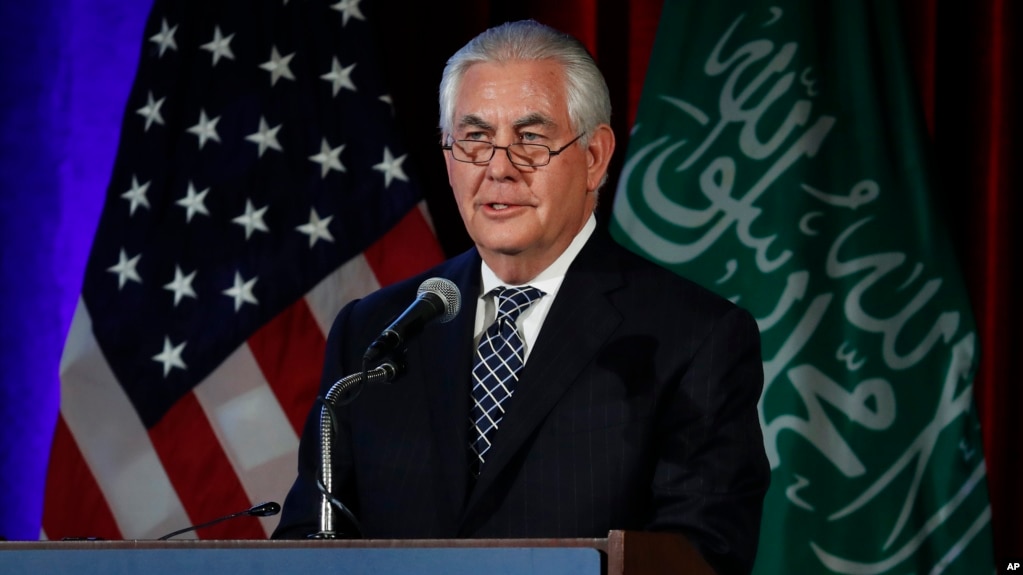
This change in American foreign policy has also been demonstrated by US Secretary of Defence James Mattis’ recent visit to Saudi Arabia to discuss counter-terrorism (the Yemen Civil War), and increasing military and economic ties. Also Secretary of State Rex Tillerson spoke at a recent US-Saudi business summit, which encouraged increased business ties between the two nations.
Yemen Civil War
Despite not gaining much media attention, the Yemen civil war has dramatically impacted the Middle East – creating 2.5 million internally displaced people, hundreds of thousands of refugees and has triggered increased Western involvement in the region.
The Yemen civil war is a key part of the recent resurgence of a stronger Sheba (Gulf States) and Dedan (Saudi Arabia) alliance, which has also served to strengthen British and Americans support of the Gulf States.
The civil war began in 2015. The war is a dispute between the internationally recognised Sunni government led by President Hadi and the Shia rebel group, Houthi. The Sunni government are backed by Saudi Arabia, and the Shia rebels, Iran. Hence the Yemen civil war is a proxy war between Iran and Saudi Arabia.
Like Syria, there are several faction groups fighting (Hadi government, ISIS, Al-Qaeda and Houthis), but in its simplest form the Yemeni civil war is a war of religion. Yemen is 56% Sunni, and 44% Shia. Saudi Arabia (Sunni) is fighting in Yemen, to keep Iran (Shia) out of Yemen, to avoid having them as a threatening neighbour. Previously as Obama wanted to side with Iran, the US had condemned Saudi Arabia’s participation in the war. However now with a change in administration and foreign policy, President Trump has authorised increased airstrikes in Yemen to support the Saudis and has recently even offered to give Saudi Arabia military and intelligence support.
As Yemen is part of the Biblical territory of Sheba, Trump’s recent involvement in Yemen and support of Saudi Arabia, is bringing together the alliance of Ezekiel 38 that we expect.
India
India is part of the British Commonwealth, and has recently developed closer ties with Britain and Israel.
In 1947, India gained independence from the British. However due to the internal conflict between the Hindu and Muslim population, the nation soon split into India and Pakistan. These two nations have continued to have a contentious relationship. As Pakistan has become increasing isolated (and wanting to push away from Western influence), they have turned to Russia for military and security support. Likewise, India has begun developing a closer alliance with Israel and now post Brexit, with Britain. The religious divide between these nations, has forced them both to develop alliances in accord with Bible prophecy (Pakistan being an extension of the King of the North territory (Daniel 11), and India a young lion, therefore a supporter of Israel).
In November 2016, Theresa May visited India to discuss a potential trade deal, as the triggering of Article 50 loomed. Previously under the EU, Britain was not allowed to create a free trade agreement with India. Brexit has not only facilitated Britain to leave Catholic Europe, but also pushed them to strengthen their relationship with their “young lions” (the Commonwealth). Although a free trade agreement with India has not yet been constructed, it appears to be only a matter of time. Similarly India has also begun to develop business ties with the other allies of Israel – Saudi Arabia and the Gulf States.
Over the past few years India and Israel have also been developing a closer relationship. India has abstained from voting against Israel in several UN resolutions. In 2015 India and Israel negotiated several extensive trade deals. In November 2016 the Israeli President visited India. In July this year, Prime Minister Modi will visit Israel (the first Indian PM to visit Israel). Previously Indian Ministers have visited both Israel and Palestine to indicate their neutrality. However this time, Modi is only visiting Israel – showing their clear support of Israel.
Britain
As the Brexit process has officially begun, Theresa May is seeking to develop trade deals with non-EU nations (as seen by recent discussion about potential trade deals with Australia, US, New Zealand, Canada and India). Consequently she has turned to her Commonwealth and the Sunni Arab nations to create trade deals, to prepare Britain’s economy for life post-Brexit.

In December, Theresa May flew to Bahrain to meet with the GCC (Gulf Cooperation Council: which includes Saudi Arabia, Yemen, Oman, UAE, Bahrain, Qatar and Kuwait) to develop trade agreements. This month, May has also flown to Saudi Arabia, and met with King Salman, the Crown Prince and other Saudi officials to discuss trade and investments.
Also this month, the Qatar PM flew to meet with Theresa May in London to create a post-Brexit trade deal. Likewise also the UK Secretary of State for International Trade has recently said the UK wants to increase trade with Oman by a billion pounds.
Brexit has not only pushed the UK out of Catholic Europe, but also has forced it to create alliances and trade deals with Sheba and Dedan – preparing the alliances for Armageddon.
Conclusion
While many prophetic events have been occurring in Russia, Syria and Europe, the defenders of Israel have begun to emerge. Tarshish, Sheba, Dedan and the ‘young lions’ have begun to form not only by the creation of alliances with each other, but also their increasing isolation that has driven them to befriend and support Israel. Their unification could drive a wedge between them and the European-Russian confederacy – as Ezekiel 38 foretells.
 Bible Prophecy & Current Events