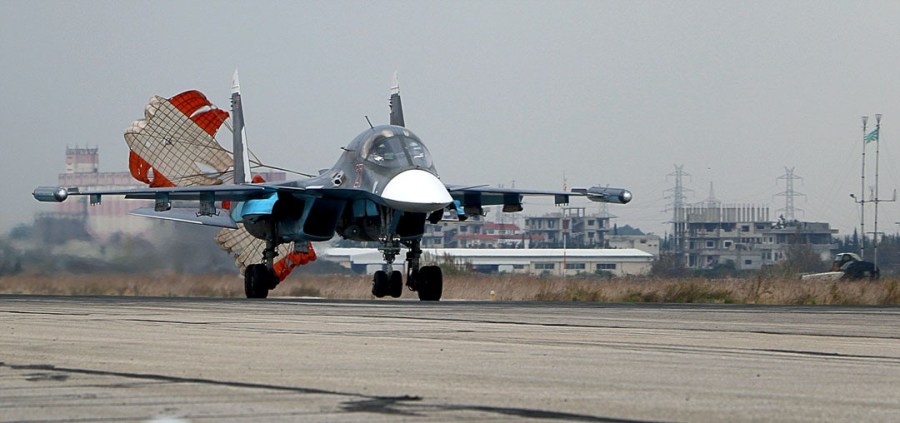
Russia just violated Turkish airspace again

This time, Turkey didn’t take the bait and wisely so, because this time Russia has the most advanced aerial defence system in the world on standby, itching to prove itself to the world.

As Russia and Turkey face off, we are reminded that we are sitting on the verge of the return of Christ.

Putin has said that he cant guarantee that it wont happen again.

Is this second airspace violation our last reminder?


Putin allows terrorists onto the Golan border – breaking his promise to Israel

A large Hezbollah force has entered the southern Syrian town of Daraa, a critically dangerous event for Israel’s security.

The way to the town, which lies near the Jordanian border and across from the Israeli Golan, was opened before Hizballah by none other than Russian forces. This was a blatant violation of President Vladimir Putin’s commitments to Prime Minister Binyamin Netanyahu and Jordanian King Abdullah not to permit Iranian and Iran-backed forces, such as Hizballah and Iraqi and Afghani Shiite militias, reach their borders in consequence of Russia’s military intervention in the Syria war.

Daraa is just 32 km from the southern Golan and 12 km from the Jordanian border. Hizballah forces in this town are therefore within easy striking distance from northern Israeli and Jordan.

What happened Wednesday was that a sizeable Hizballah contingent made it into Daraa, the day after a Syrian unit under the command of Russian officers captured the town of Sheikh Maskin, cutting off rebel forces east of Daraa from their comrades to the west. Control of Sheikh Maskin is the key to the crossroads leading to Damascus in the north, the Druze Mountain town of es-Suwaida in the east, and Quneitra on Golan opposite Israel’s northern defenses.

The battle for Sheikh Maskin was the first in the Syrian conflict to be directly fought under Russian command. Its fall sparked accounts of Russian officers commanding Syrian troops in different parts of Syria.

So far, Israel has not reacted to the Hizballah force’s advance, notwithstanding public statements by Prime Minister Binyamin Netanyahu and Defense Minister Moshe Ya’alon that this would never be allowed to happen.

DEBKAfile’s military sources explain this reticence by a persistent misreading of the Syrian crisis in the higher ranks of the Israeli defense establishment. Military Intelligence chief Maj. Gen. Herzl Halevi, who has a good grasp of its complexities, is a lone voice against the defense minister and IDF chief of staff, Lt. Gen. Gady Eisenkot

In Amman, however, King Abdullah and his generals signified both alarm and fury. DEBKAfile’s sources report that Wednesday morning, the king shot off an urgent message to President Putin demanding an explanation for the Russian officers’ action in opening the door of Daraa to hostile Hizballah fighters.

Jordan has fought Hizballah and its conspiracies for three years, ever since its security forces seized an arms cache that Hizballah had smuggled into the kingdom for a terror cell to mount attacks in the northern province of Irbid. Amman is now concerned that Hizballah is close enough to make a grab for Al-Ramtha, the only border crossing between Syria and Jordan. That would be a feather in the cap of Iran’s Lebanese proxy, as the first Arab border crossing to fall to a Hizballah force outside Lebanon, and one, moreover, located athwart a main regional water source, the Yarmouk River.

As of Thursday morning, Jan. 28, Abdullah had not received a reply to his missive from Putin, but a message did come through to Amman from Syrian President Bashar Assad.

Using a back-door intelligence channel, he sent a notice in the name of Gen. Bahjat Suleiman, former Syrian ambassador to Jordan until he was expelled in May 2014, that King Abdullah must now face the consequences of his long support for the rebels of southern Syria.

The monarch was also advised to prepare for the influx of thousands of fleeing rebel fighters whom the combined Syrian and Hizballah forces were pushing towards the Jordanian border.

The next hours will be critical for the development of a similar crisis on the Israel-Syrian border in the Golan region.

The risk of a confrontation on the Golan is already high – click here to find out about the context behind this crisis.

This article was originally published on DEBKA
Russia, France, UK & US are conducting an allied assault on Libya

Over the last few months, you may be aware that large parts of Libya have rapidly fallen under the control of ISIS.

If you haven’t already seen it, Debkafile has published some amazing news: an allied assault has begun in Libya.

Here are some extracts:

“The first step in this campaign took place this weekend: A group of US, Russian, French and Italian Special Forces quietly landed at a point south of Tobruk near the Libyan-Egyptian frontier. Standing by after preparing the ground were some 1,000 British SAS troops.”

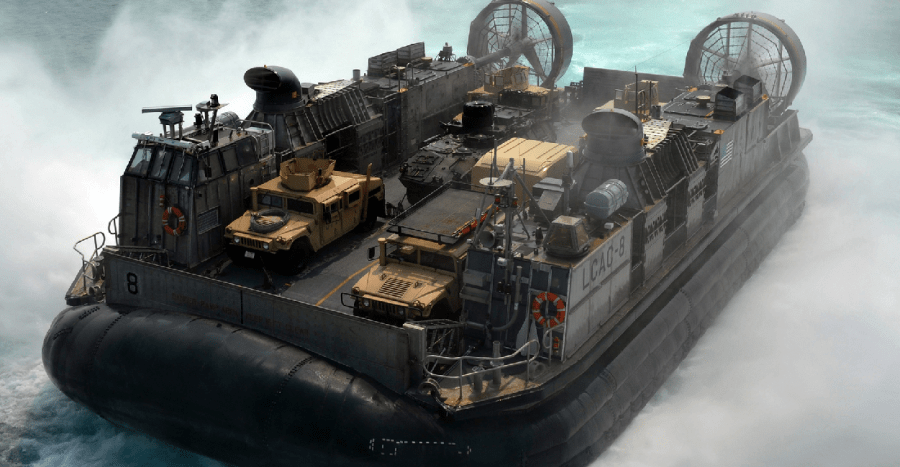
“At the peak of the assault, large-scale US, British and French marines will land on shore for an operation first billed as the largest allied war landing since the 1952 Korean War.”

Terrorists draw Turkey into conflict with Russia

This article is part of a series authored by STRATFOR – a geopolitical intelligence firm that provides strategic analysis and forecasting. For other articles by STRATFOR click here.


A powerful explosion went off in Istanbul near the city’s most prominent tourist attractions on Jan. 12, killing at least 10 people and injuring six foreign tourists. The blast, which took place in front of the ancient Egyptian Obelisk of Theodosius and near the Blue Mosque in the Sultanahmet district, reportedly involved a suicide bomber. Though the Turkish government is currently in conflict with numerous terrorist and non-state militant groups, the location, target and method of attack point to the Islamic State as the primary suspect behind the operation. In comments made after an hour long meeting of the country’s National Security Council, Turkish President Recep Tayyip Erdogan said the suicide bomber was of Syrian origin.

By cracking down on the Islamic State and actively supporting rebel operations against the extremist group in Syria, Turkey has knowingly made itself a target of the many groups loyal to the Islamic State. Furious at the disruption of their vital supply lines through Turkey because of the crackdown, which has steadily intensified since July 2015, Islamic State leaders have repeatedly vowed to launch severe retaliatory attacks. The first serious attack occurred last year on July 20, when the group staged a suicide bombing attack in the Turkish town of Suruc, near the Syrian border. Turkish raids and arrests stopped several other planned attacks, but not all of them; on Oct. 10, the group struck again in Ankara.

The latest attack, which hit in the heart of Istanbul’s oldest quarter, could galvanize an even stronger Turkish response against the Islamic State. Indeed, Ankara has already been pushing its allies to support it in an operation in Syria’s northern Aleppo province that aims to create a buffer zone in the Azaz-Jarablus zone. A successful operation would serve Turkish interests by hurting the Islamic State, strengthening the rebel position in northern Syria, preventing the Kurdish People’s Protection Units (YPG) from expanding farther westward and — because Turkey does not want to go it alone — drawing the United States deeper into the conflict.

However, Russia’s intervention in Syria has greatly complicated Turkey’s plans for the operation, and in the wake of Turkey shooting down a Russian Su-24 warplane, Moscow continues to frustrate Turkish ambitions in the country. The Russians, for instance, have reinforced their air defense assets in Syria, and in a Dec. 17 interview, Russian President Vladimir Putin dared Turkey to fly over Syrian airspace with the implication that the aircraft would be shot down if it did. Faced with the prospect of a potential war with Russia if it proceeded with an armed incursion into Syria, Ankara has been forced to revise its plans for northern Aleppo.

In spite of the risk that Russia poses, Turkey could increase its involvement in Syria. This latest Islamic State attack on a Turkish city comes at a time when the Kurdish-dominated Syrian Democratic Forces have crossed the Euphrates River in their push westward and Russian- and Iranian-backed loyalist offensives have ratcheted up the pressure on Turkey’s Syrian rebel proxies. The Turks may choose to carry out intensified strikes with long-range missiles from the safety of their own borders, but a greater Turkish incursion into Syria cannot be ruled out.

Terrorists Target Turkey, Again is republished with permission of Stratfor.