President Trump would embolden both the Russian Nationalist agenda, and Israel’s Zionist agenda

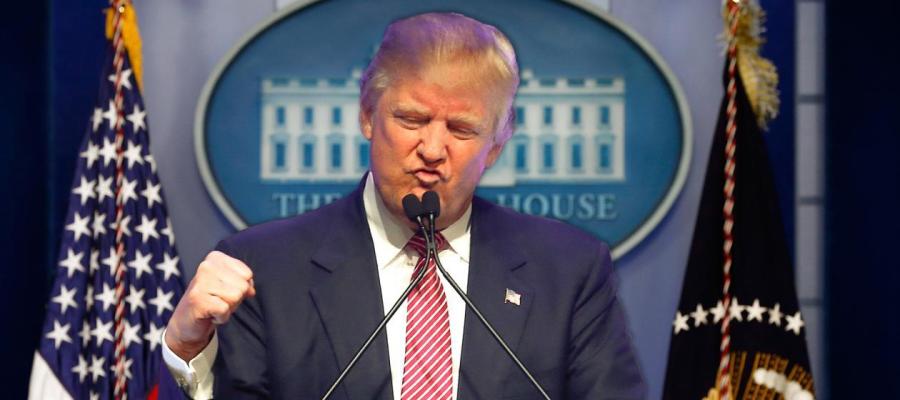
In an astonishing turn of events, Donald Trump, who has never held any elected office, will soon hold the most powerful office in the world.

Not only will the real estate tycoon and TV reality star have executive power over the state, but having secured hold of both the Senate and the House of Representatives, Trump will have secured a level of power which not even Obama was able to obtain.

Yet throughout his campaign, Trump has defied every convention and turned the presidential race into a reality TV show.

His rash and ostentatious behaviour which is a matter of public record includes threatening to punch protesters, making vulgar statements about women, mimicking a disabled reporter, bragging about trying to have an affair with married women and broadcasting his admission of not paying tax.

While his primitive temperament has stunned much of the upper class, it is no surprise to Bible students who understand that God can – if he so desires – put in place rulers who are the basest of men.

What is of notable significance to Bible students, is his unorthodox approach to US foreign policy, particularly in relation to Europe, Russia and Israel.

Readers might recall that before the Brexit, most world leaders were calling for the UK to stay within the European Union, and many – like UK Prime Minister David Cameron – suggested that a Brexit could result in another World War. Ofcourse, Trump joined the chorus of those who supported the Brexit, despite its potential to significantly degrade peace and stability on the European continent.

Trump on NATO: “Congratulations, you will be defending yourself”

As if European security this was not a problem already, Trump believes that NATO (The European military buffer against Russia) is obsolete.

If we (the US) cannot be properly reimbursed for the tremendous cost of our military protecting other countries… then yes, I would be absolutely prepared to tell those countries, ‘Congratulations, you will be defending yourself.’

DONALD TRUMP – interview with the New York Times (July 20th)

Trump believes that Europe should shift its focus away from Russian deterrence and more toward combating terrorism and dealing with migrant flows.

Degrading NATO in the face of growing Russian Nationalism could very well empower Russia and her interests in Europe and the Middle East.

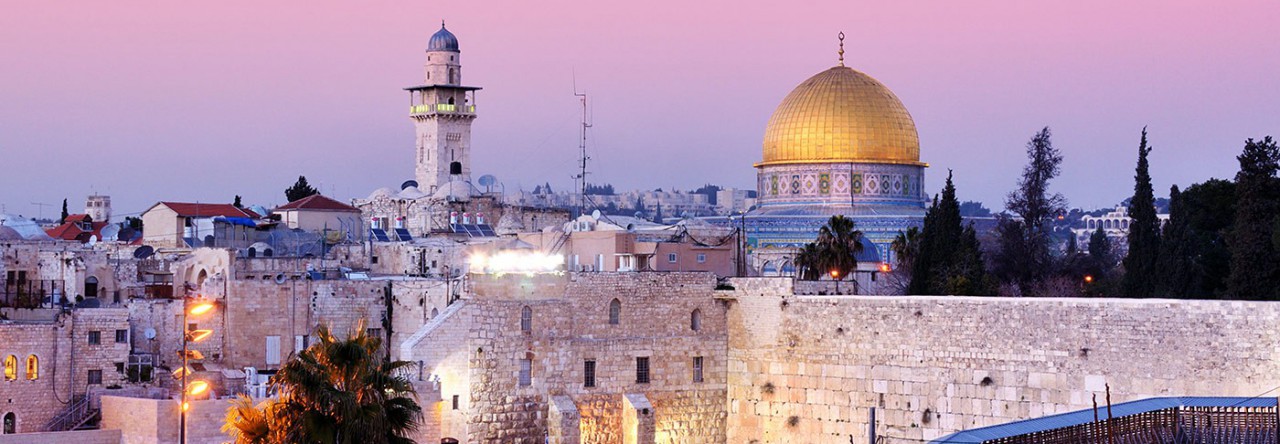
Trump would recognise Jerusalem as Israels capital

Since 1949 when Israel declared West Jerusalem its capital, and 1967 when Israel captured East Jerusalem, the United States has never once supported Israeli occupation of Jerusalem, or recognised its status as the capital city of Israel.

However, Trump has already told the Prime Minister of Israel that he would recognise Jerusalem as Israels united capital.

Trump acknowledged that Jerusalem has been the eternal capital of the Jewish people for over 3,000 years, and that the US, under a Trump administration, will finally accept the long-standing congressional mandate to recognise Jerusalem as the undivided capital of the state of Israel

– Trump Campaign statement.

Trump supports Israeli annexation of the West Bank

Perhaps the most internationally provocative of policies is that Trump would support an Israeli annexation of the West Bank which is opposed by virtually all of the international community.

At a time when Israels government under Netanyahu has become very Zionist and his cabinet ministers are publicly speaking about West Bank annexation, this will be a time of great opportunity for Netanyahu’s government who have acknowledged that without Abbas, the West Bank would fall into the hands of the Palestinian terrorist group, Hamas.

It also comes at a time when the Palestinians are using their voice at the United Nations to provoke Israel, and encourage UNESCO to ignore Jewish ties to the land including the Temple Mount, and even the Dead Sea Scrolls.

This is another provocative and audacious attempt by the Palestinians to rewrite history and to erase our connection to our land. The Dead Sea Scrolls are factual and weighty archeological evidence of the presence of the Jewish people in the Land of Israel.

Israeli Ambassador to UNESCO Carmel Shama-Hacohen.

There is no doubt that a Trump foreign policy would be a startling difference to the activist policy that has been promulgated under Obama & Hillary.

After the Brexit vote the world is moving into a new era, and one which could ultimately result in the Russian invasion of Israel prophesied in Ezekiel 38.

Will Israel Annex the West Bank?

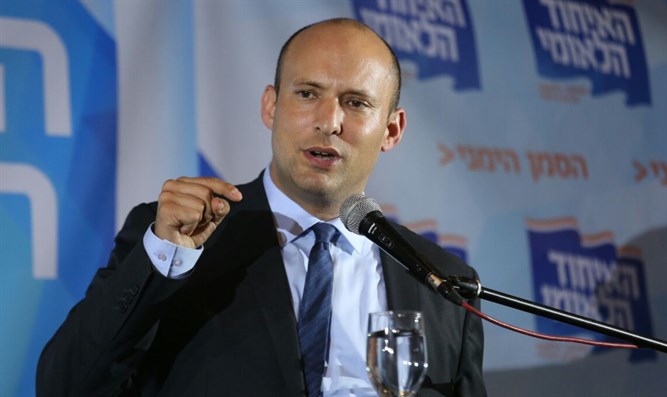
Israeli Education Minister, Naftali Bennett, a leader of the Jewish Home Party, recently called on the Israeli government immediately to annex Judea and Samaria, which abut Jerusalem. This area, usually referred to as “the West Bank”, was captured from Jordan during the Six Day War in 1967. In Ezekiel 38:8 the area is referred to as “the mountains of Israel”.

Education Minister Naftali Bennett calls for Israel to extend sovereignty over Judea and Samaria

Approximately 450,000 Israeli citizens live in the area. Most of them are Jewish, while some are Arab citizens of Israel. At present, they live under the laws of the Palestinian Authority and the land they occupy is regarded by most nations as belonging to the Palestinians.

Mr Bennett’s extremely hawkish and provocative suggestion came in the wake of a recent UNESCO statement which denies any Jewish link to the Temple Mount. The Education Minister claimed that the UNESCO statement reflected “the failure of Israel to clearly express Jewish rights to the historic Land of Israel”. He went on to say, “That’s what happens when we don’t treat our own land as ours. The UNESCO resolution is an attempt to deny history. But you know what? You cannot change history. Israel is ours for well over 3,000 years. It will be ours –Jerusalem is ours – but it’s time to apply Israeli law to Judea and Samaria”.

In accordance with the confidence of the Israelis that is suggested in the language of Ezekiel 38, Mr Bennett dismissed concerns about the international opposition such a move would trigger with the words, “Don’t fret global opposition; annex Judea and Samaria now!” This bold position may have been strengthened by comments from Donald Trump’s camp in the United States Presidential election campaign. In June, David Friedman, Mr Trump’s co-adviser on Israeli affairs, said that Mr Trump does not believe Palestinian state. He went on to say that, if elected president, Mr Trump would support Israel’s annexation parts of the West Bank.

The Minister cited earlier precedents for such annexation, noting that, “Menachem Begin in 1981 did the same thing for the Golan Heights. [Prime Minister] Eshkol in ’67 did the same thing in Jerusalem. And there was always a world [that opposed it]. But there was the will power and the courage to do it – and we need to do what’s right for Israelis, for the Jews, and that’s the right thing.”

While not calling for wholesale annexation of Judea and Samaria, other Israeli officials have also spoken recently about increasing Israeli sovereignty over parts of the West Bank. Justice Minister Ayelet Shaked is establishing a committee to organize the legal status of land settled by Israelis in the West Bank. This is intended to resolve the concerns of residents of West Bank settlements that their land may be taken from them.

Deputy Foreign Minister Tzipi Hotovely, a hard-line member of Israeli Prime Minister Benjamin Netanyahu’s Likud party, in late October publicly promoted the concept of annexing a significant area in the West Bank. She said that, “The answer to the international struggle over Jerusalem is applying sovereignty over Ma’ale Adumim, which will guarantee Jerusalem will always remain united and develop”. Welfare Minister Haim Katz, also from the Likud party Ms Hotovely’s call for annexation.

Given the reluctance of successive Israeli Governments since 1967 to annex this territory it is unlikely that Israel would move to incorporate Judea and Samaria (the West Bank) into Israel. If it did so, it would need to manage the demographic challenge of several million Arabs who currently live there. Of course, circumstances can change very suddenly, especially in the volatile political climate of the Middle East, and the fact that there are senior Government Ministers willing to advocate for annexation confirms that it remains a possibility.

Whatever the legal status of Judea and Samaria might be in the future, what is certain from Ezekiel 38:8 is that this area will be the focus of the Gogian invasion. It could be that any Israeli move to seize even part of the West Bank could be a trigger that Gog might use to justify his thrust into the Holy Land.

“The relationship with India has never been as strong as it is today…”

A few days ago I received an email from Isi Leibler – a Jewish journalist who writes for the Jerusalem Post in Israel. To be honest I couldn’t believe my eyes when I read his letter – perhaps I shouldn’t have been so surprised.

Leibler, a Zionist, has been writing about many aspects of Israel including its relationship with global powers like the European Union, the Vatican and Putin’s Russia, which are all threatening to impose their sphere of influence on Israel in one way or another.

Unwittingly he has observed and written about many of the traits that we expect to characterise the latter day Israel, prior to the return of the Messiah.

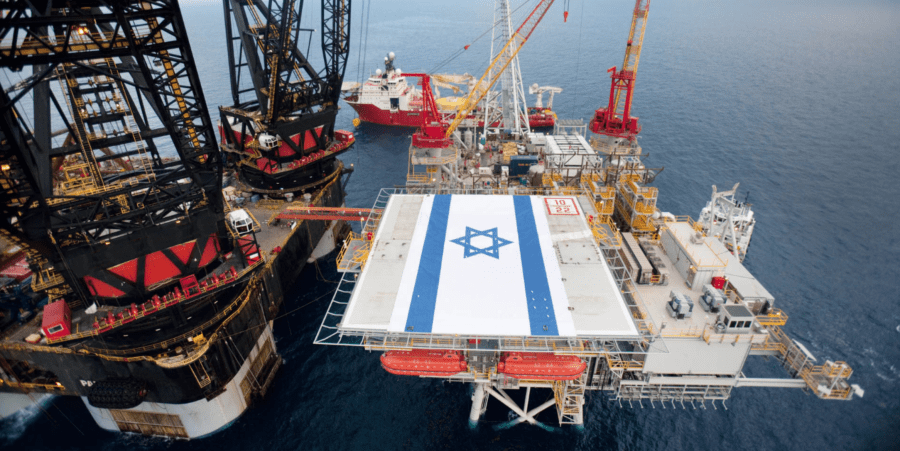
In his Rosh Hashana email, Leibler touches on Israels strong relationship with the Biblical Tarshish, the improved relations with Sheba and Dedan, and the ongoing growth in wealth, from hi-tech and biotech success, through to the discovery of gas – all characteristics which could become an irresistible proposition for an impoverished Russia. (Ezekiel 38)

I quote from his Rosh Hashana letter – enjoy reading:

The relationship with India has never been as strong as it is today and we have developed solid economic links with China, Japan and other East Asian countries.

There have been remarkable diplomatic breakthroughs in Africa with the potential for major economic and political development, as well as a strengthening of relations in Latin America.

The most incredible change has been in our relationships with the moderate Sunni states. We are partnering with Egypt against Islamic fundamentalists in the Sinai Peninsula and President Abdel-Fattah el-Sissi has effectively praised Israel and publicly condemned Muslim extremism. There is even covert cooperation with the Saudis and the Gulf states, which recognize Israel as a critical element in the confrontation with the Iranians seeking regional hegemony.

This has yet to be reflected in the foreign policies of these countries, which still tend to engage in ritual anti-Israeli condemnations. But one senses that in the not too distant future, the winds of change will also impact on their public postures.

Beyond diplomacy, in the midst of global economic chaos, Israel’s economy has been outstandingly successful. Our ongoing progress in high-tech and biotech and our global contribution to cyber defense and security represent our biggest exports.

Two recent developments are amazing. The first is the discovery of gas fields, albeit ineptly handled politically, but which nevertheless presents a fantastic opportunity for us in economic and politically strategic terms which will soon be realized. The second, which we take for granted, is the remarkable success of our desalination program which provides 80 percent of our water needs and far exceeds that of any other country. It also represents yet another major contribution by Israel to global welfare.

http://www.jpost.com/Opinion/Rosh-Hashana-5777-Gratitude-and-optimism-469256


Brexit and Israel

The decision of the British people to leave the European Union (EU) reflects their perception that the EU has a negative impact on the United Kingdom (UK).  Few if any will have given any thought to the implications of that decision for Israel, but that it will have implications for Israel is certain; it is these that will be of most interest to students of prophecy.

It has long been recognised that the UK and Germany are Israel’s strongest supporters in Europe.  For that reason, Oded Eran, Israel’s former ambassador to the EU, said that from Israel’s perspective it would have been preferable for the UK to remain in the EU.

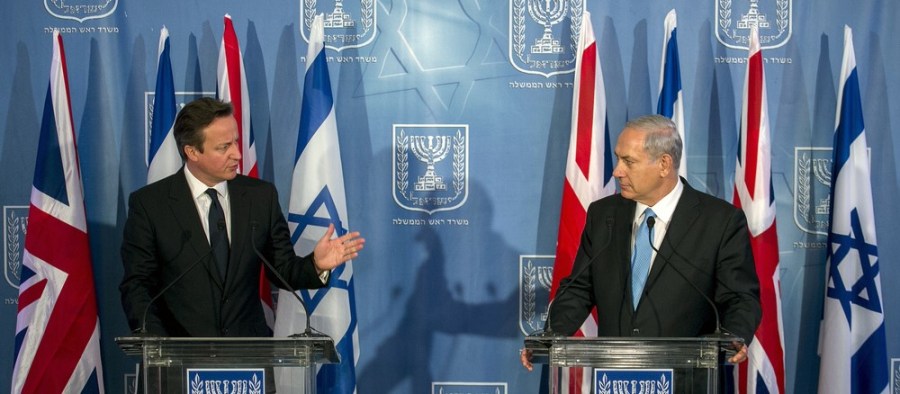
Mr Eran was not alone in this view.  Just a few days prior to the referendum, former UK Prime Minister David Cameron addressed a Jewish audience and urged them to vote to stay.  He asked them to consider the implications for Israel: “Do you want Britain, Israel’s greatest friend, in there opposing boycotts, opposing the campaign for divestment and sanctions, or do you want us outside the room, powerless to affect the discussion that takes place?”  That Jewish audience might have agreed with Mr Eran and Mr Cameron, but the majority of the electorate voted to leave.  The UK’s ability to support Israel from within the EU will come to end when she formally leaves the EU, which is expected to be in 2019.

Having lost the referendum, Mr Cameron resigned and was replaced as Prime Minister by Theresa May, but that does not mean that UK support for Israel has been weakened.  Mrs May, the daughter of Anglican vicar and a devout Christian, has visited Israel on several occasions, taking a particular interest in Israel’s high-tech industries.  As Home Secretary she was noted for her very strong stand against antisemitism.  Following the 2015 terrorist attack on a Jewish supermarket in Paris, Mrs May wore a sign declaring “Je Suis Juif” (I am a Jew).

Israel may expect the UK to remain a close friend in coming years, but the UK’s ability to temper anti-Israel sentiment in the EU will come to an end.  This will be seen as a mixed blessing by Israel.  A few days after the referendum, the UK’s ambassador in Israel, David Quarrey, reassured Israel that the UK would remain a friend and partner of the Jewish state.  He noted that the UK had been a friend of Israel before it joined the EU and would remain so after it left.

The UK is the world’s fifth largest economy and a significant trading power.  Its exit from the EU is likely to see the UK focusing more on markets elsewhere in the world.  This would include trade with other members of the Commonwealth but also with nations in the Middle East.  In that context, Israel already is the UK’s single-largest trading partner in the region.  Trade between the two nations, largely is in Israel’s favour, is predicted to exceed US$10 billion this year and is expected to keep growing.  It has been suggested that Brexit might enhance this trading relationship if Israel and the UK can put together a bilateral free-trade agreement relatively swiftly.

The positive and negative implications of Brexit for Israel mesh very well with long-standing interpretations of Bible prophecy which present the UK as a trading power offering support for Israel at the time of the end when she is threatened by Gog and his allies, which include European nations.  The use of the word “merchants” in Ezekiel 38:13 suggests it may well be bilateral commercial interests which influence the UK to express support for Israel at that time.  In all these things we can detect the hand of the angels manipulating world events in accordance with God’s plan and purpose.  Let us have the wisdom to heed the signs of the time and prepare for our Lord’s return.

Israel and the X factor in Australian Politics

One of the big winners in the 2016 Federal election in Australia is the Nick Xenophon Team, a political party created by former independent Senator Nick Xenophon.  Mr Xenophon first came to prominence as a fervent campaigner for gambling controls.  Gambling often leads to significant problems for vulnerable people and his stance on the evils associated with gambling appealed to many in the community.

As first a member of the Upper House in the South Australian parliament and later as a senator in Federal parliament, Mr Xenophon expanded his platform by campaigning for a number of populist causes, portraying himself as the champion of the downtrodden and marginalised.  He is a strong advocate of domestic manufacturing and has argued for protection for industries and jobs perceived to be at risk from economic reforms and liberalised trading arrangements.

In the 2016 Federal election Mr Xenophon’s populist policies attracted considerable support and delivered his team several seats in the Federal parliament.  He now has more influence in Canberra than ever before, especially in the light of the tight outcome of the election and the finely balanced numbers in parliament.  Mr Xenophon’s support will be vital if the government is to remain in power and in its efforts to secure support for legislation it wishes to enact.  It must be expected that Mr Xenophon will seek support for causes he holds dear in exchange for his support of the government.

But what does this have to do with Israel?  More than you might have imagined.  While Mr Xenophon’s views on gambling and support for local industries are well known, what is less well-known is his fervent advocacy for the Palestinians in their struggle with Israel.  In August 2014, Mr Xenophon travelled to the Middle East as a guest of the Australian Friends of Palestine Association (AFOPA).  While there, his itinerary involved mainly meetings with Palestinian officials.  His contact with the Israeli side of the conflict was confined mostly to meetings with extremist Israeli groups which are harsh critics of the Israeli government.  Mr Xenophon has donated funds to the AFOPA, an organisation which actively supports the boycotts, divestment and sanctions (BDS) movement which condemns Israel and seeks to isolate the Jewish state from the wider world.

Mr Xenophon was one of the first signatories of what is known as the Canberra Declaration.  This extremely one-sided and poorly-informed document calls for an end to Israel’s occupation of the Palestinian territories and its alleged blockade of Gaza.  His contributions in the Senate have reflected his support for this slanted view of the Israeli-Palestinian dispute.

In the Senate on24 March, 2015, following a meeting he had with the Australia Palestine Advocacy Network (APAN), Mr Xenophon made a speech which was highly critical of Israel, in the course of which he claimed incorrectly that:

Gaza has been living under an Israeli blockade since 2007 when Israel placed massive restrictions over movement of people and goods in and out of Gaza.

In that speech Mr Xenophon did criticise Palestinian forces in Gaza for firing rockets into Israel but his rhetoric was overwhelmingly anti-Israel.  He questioned the proportionality of Israel’s response to the rocket attacks from Gaza, ignoring the fact that this is complicated by Hamas’ policy of using civilian infrastructure and human shields for military purposes.  He also ignored the stringent border restrictions imposed on Gaza by Egypt.  It is likely that the omissions from that speech reflected the slanted information supplied to him by the APAN.

At a Senate committee hearing on 3 June, 2015, Mr Xenophon directly questioned whether recognition of Israel as a Jewish state is consistent with the Australian government’s support for a two-state solution to the Israeli-Palestinian dispute.  In the light of Joel 3, students of prophecy have good reason to be sceptical of the two-state solution.  It should be recognised, however, that when an avowed supporter of the Palestinian side questions the legitimacy of the two-state solution they are really calling into question the concept of a national homeland for the Jews in any form.

On 25 June, 2015, Mr Xenophon addressed the Senate criticising the Attorney-General’s statement that “the description of East Jerusalem as ‘occupied’ … is freighted with pejorative implications, which is neither appropriate nor useful”.  It is clear whose side Senator Xenophon supports in the debate about the status of Jerusalem.  His position may be confirmed by the fact that, on 15 July, 2014, Mr Xenophon co-hosted a forum to mark the tenth anniversary of the International Court of Justice finding that Israel’s settlements in East Jerusalem and the West Bank are illegal.

It is hard to know how many of his colleagues in the Nick Xenophon Team share their leader’s views about Israel and the Palestinians, mainly because he has been very reluctant to allow them to speak for themselves.  It is known, however, that the Team’s lead candidate for the Senate in Victoria, Naomi Halpern, who is Jewish, has used social media to support the description of Israel as “a 68-year-old apartheid state”.

Since its creation as a Jewish state, Israel has enjoyed strong support from Australia.  While the electoral success of Senator Xenophon is unlikely to overturn completely Australia’s support for Israel, the government might be encouraged to tone down its advocacy for the Jewish state.  Ezekiel 38 portrays Tarshish and the young lions as mounting a somewhat muted response to the Gogian host which invades Israel at the time of the end.  One wonders whether the political influence of Senator Xenophon and his colleagues in the new parliament might extend to foreign policy issues affecting Israel and the Middle East.  We cannot be sure, but we may be certain that God is at work influencing the nations in unseen ways to ensure that His plan and purpose is worked out.  Should our Lord’s return be delayed we may watch with interest how the X factor influences Australia’s policy toward the Middle East.