Pope Francis receives the Charlemagne prize, and speaks of his dream for Europe.

This headline is personally one of the most faith affirming headlines I have read this year.

While so much prophetic progress is taking place in Russia – which due to the birth of a new child I have not had the time to write about – the Papacy on the other hand is outworking exactly what Christ said it would be, those few moments before his own return.

What exactly is this apostate system up to now? Well lets cover some context briefly.

Yesterday, Pope Francis was awarded by – none other than Europe itself – the ‘prestigious Charlemagne award’. Charlemagne was the first Emperor of Holy Roman Empire, a Catholic, who united several nations together to form a religious empire.

Just like Charlemagne, Pope Francis is now playing a key role in European unification. While calling himself ‘a political animal’, the Pope is dutifully acting out the part of the prostitute riding the beast as described by Christ in Revelation 17.

But that is just the beginning: During his award speech to the European Parliament, Pope Francis spoke wistfully about his dream for a ‘new Europe’ which brings us back to chapter Daniel 2.

Remember Nebuchadnezzar’s image in Daniel 2? The feet were made of iron and clay, but it was the iron (the Roman Catholic influence) that kept the clay together. This was together manifested in ten toes – the ten European nations – whose only reason for unification, was Roman Catholicism, just like the state of affairs brought about by Charlemagne himself.

Infact, speaking of the kingdoms under Charlemagne, Bro. Thomas says;

At this crisis of affairs, there existed … the Ten Toe Kingdoms. I would remark here in passing that it has hitherto been found impossible to define these kingdoms according to the number given. Several tens have been guessed at, but the lists bear inaccuracy on the face of  them. The kingdoms are represented by ten horns, and ten toes, because there would be that number appearing on the territory of the Roman Beast between A.D. 476 and A.D. 799, the interval between the fall and restoration of the Western Roman Empire…

At the time of the revelation of Jesus Christ and the Saints, there will also be ten kingdoms whose territories will embrace those of the original Gothic Ten.

Exposition of Daniel Pg 75

So while the Pope is fulfilling Revelation 17 by committing fornication with the “kings of Europe”, he is also on the cusp of fulfilling the unification of 10 nations as described by the ten toes in Daniel chapter 2 & the ten horns in Rev 17:

“The ten horns which you saw are ten kings who have received no kingdom as yet, but they receive authority for one hour as kings with the beast.

Revelation 17

However this prophecy could well be fulfilled AFTER the return of Christ.
While we are witnessing these amazing prophecies come into fulfilment before our eyes, neither of those prophecies mentioned in Rev 17 or Daniel 2 directly portend the return of Christ.

But there is one prophecy which does portend the return of Christ:

The very last sign to occur before His return is the “Unclean Spirits like Frogs” which are explained here in more detail, but in short, represent unclean teachings being spoken from the mouth of the false prophet (the papacy), the beast (Europe), and the dragon (Russia).

One such unclean teaching, is the doctrine of humanism.

In his Charlemagne speech, (full script here FYI) the Pope talks extensively about his dream for “a new European humanism”:

“Europe is weary, aging, no longer fertile…

With mind and heart, with hope and without vain nostalgia, like a son who rediscovers in Mother Europe his roots of life and faith, I dream of a new European humanism, one that involves “a constant work of humanization” and calls for “memory, courage, [and] a sound and humane utopian vision”.

I dream of a Europe that is young, still capable of being a mother: a mother who has life because she respects life and offers hope for life.

Pope Francis

What you just read is a perfect example of the “Unclean Spirits like Frogs” being uttered by the Papacy; the last sign, before the return of Christ.

Even so, Come, King Jesus.

Read More:

The Kingdom of God – Part 2

Continued from Part 1: Brother Roberts vision of the Kingdom:


This is only the profane portion of the land – a scene of peace and righteousness and plenty, truly, but not comparable to “the holy portion of the land.” Come to the holy portion of the land – the land given as an oblation to the Lord.

We approach Jerusalem, or rather Yah Shammah (the new name of the new city) from the south.

It stands in the southernmost section of the holy portion.

It is an immense city, built upon a plan of perfect symmetry and proportion.

It is very unlike the huddled clusters of human dwellings called towns with which we have been familiar.

The general plan is an exact square, marked by an outer wall.

The square is of enormous extent, measuring nine miles through at any point.

The wall is of bright stone, and adorned with towers at regular distances.

We only see the south wall.

It stretches away right and left further than the eye can follow.

It is over nine miles long on the south side, and on all the other sides the same.

There are lofty ornamental gates at regular distances.

We descend from the overlooking hill and enter by one of these gates.

It would be pleasant to stay and inspect the city; but we want to hurry on to the temple, and, therefore we must be content with a rapid passage through the central thoroughfare, which we have chosen, to the northern exit by one of the gates in the north wall.

Just before passing on, we notice at a glance the stately character of the city.

The streets are straight and wide, and shaded with trees, and, at regular distances, open out into squares and crescents.

The houses are not high, and stand apart in gardens except where here and there palatial blocks of buildings spring from the midst of the squares.

We ask what these are and are informed that they are reception-houses, for the accommodation of the visitors who daily come from all parts.

There is an immense number of the people in the city, but the city is so vast that they do not appear numerous, except at certain points, as we pass along.

Their aspect is such as never saw in any city crowd before – so quiet, yet so cheerful; so brightly interested in everything, yet so orderly and respectful; so apparently cultured and well-to-do, yet having none of the fussiness and arrogance usually associated with prosperity.

All are well-clad, clean, intelligent, good, righteous, and happy,- no boisterous merrymaking- no foolish banter – no unsuitable speaking.

They are a few of the happy subjects of the kingdom of God.

They have come from all parts of the earth to do homage to the king – wives and families with them, leaving behind them prosperous homesteads and occupations, to which they will return in a little season.

We hasten in a straight line along our nine-mile avenue of picturesque and happy human habitation – (we could take the help of an electric car, if we liked; for such has been provided in all the thoroughfares, for the use of the people; but, in our new state, we prefer to walk); we can quicken our pace, when we want to do so, as we dreamt of in our mortal days.

We get out at the gate of Judah; opposite which, after crossing an ornamental common of about half a mile in breadth that runs round the entire city, there opens a magnificent highway running in a straight line in a northern direction towards the temple which is distant about thirty miles.

Along this highway we proceed.

It is very broad, and of noble aspect.

A line of tall trees in a broad band of turf divides it in the center, and again in the middle of each side, giving four spacious roadways running side by side, lined with trees and bordered with turf and flowers.

The country on each side is laid out in field and estates, which are in the occupation of the Levites and of second order who serve the temple, whose lands, however, are accessible to visitors at all times.

The country becomes more magnificent at every step.

At certain points, side roads strike off and return in many turnings and windings to the main road again.

These side roads lead through woodsy solitudes of paradisaic beauty.

Let us go down one of these roads and behold the fulfillment of the promise that the Lord would make the place of his feet glorious.

All is quiet, comforting, and beautiful.

There is no dankness, but only a sense of bracing relief in the shade they give: no wetness on the ground, but only a pleasant soft hardness.

There are no walls or fences at the side of the road.

You may walk straight off the road on to velvet turf under the trees and among the shrubs.

Here you find all kinds of fruit growing – all kinds of flowers in bloom.

You are at liberty to put forth your hand and do as you will.

How delicious the odor everywhere! We stroll and stroll.


Bro. Robert Roberts describes his vision of the Kingdom in ‘The Final Consolation’.

Stay posted to read the remainder of the series.

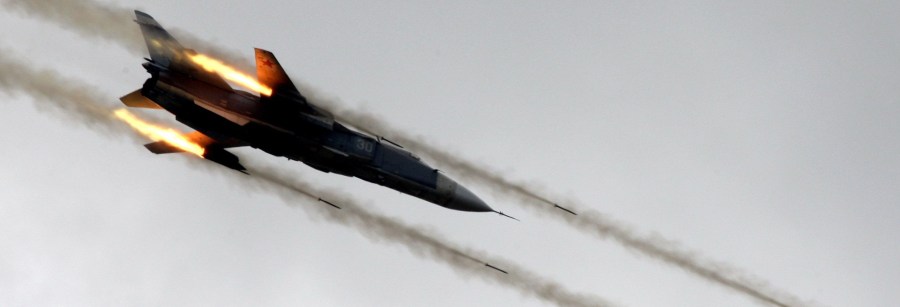
Russian forces fire at Israeli Aircraft

Reuters Reports:

Russian forces in Syria have fired at least twice on Israeli military aircraft, prompting Prime Minister Benjamin Netanyahu to seek improved operational coordination with Moscow, Israel’s top-selling newspaper said on Friday.

The unsourced report in Yedioth Ahronoth gave no dates or locations for the incidents nor any indication Israeli planes were hit. Russia mounted its military intervention in Syria in September to shore Damascus up amid a now 5-year-old rebellion.

Separately, Israel’s Channel 10 TV said a Russian warplane approached an Israeli warplane off the Mediterranean coast of Syria last week but that there was no contact between them.

An Israeli military spokesman declined comment. Netanyahu’s office and the Russian embassy in Israel did not immediately respond.

srael, which has repeatedly bombed Syria to foil suspected arms handovers to Lebanese Hezbollah guerrillas, was quick to set up an operational hotline with Moscow designed to avoid accidentally trading fire with Russian interventionary forces.

Visiting Moscow on Thursday, Netanyahu told Russian President Vladimir Putin in televised remarks: “I came here with one main goal – to strengthen the security coordination between us so as to avoid mishaps, misunderstandings and unnecessary confrontations.”

In an apparent allusion to Syria, Putin said: “I think there are understandable reasons for these intensive contacts (with Israel), given the complicated situation in the region.”

According to Yedioth, the reported Russian fire on Israeli planes was first raised with Putin by Israeli President Reuven Rivlin, who visited Moscow on March 15. At the time, Putin responded that he was unaware of the incidents, Yedioth said.


“Be ready and keep ready, you and all your hosts that are assembled about you, and be a guard for them.

After many days you will be mustered. In the latter years you will go against the land that is restored from war, the land whose people were gathered from many peoples upon the mountains of Israel, which had been a continual waste. Its people were brought out from the peoples and now dwell securely, all of them.

You will advance, coming on like a storm. You will be like a cloud covering the land, you and all your hordes, and many peoples with you.”

Ezekiel 38


Russia’s so called withdrawal from Syria

In 2015 Russia surprised the world when it committed Russian troops and military hardware to defend the Assad regime in Syria.  With Russian assistance the Assad government was able to make substantial gains against the various rebel forces who had been threatening it.

Russia caught the world off guard again in March 2016 when it announced that its forces would be withdrawing from Syria.  Exactly what “withdrawal” means is hard to define.  It is true that many of the 4,000 ground forces that had been deployed have returned to Russia, but it also is clear that the Russians will continue to operate the airbase it built last year near Latakia as well as the naval base it has long held at Tartus (having inherited it from the former USSR).

Why did Vladimir Putin decide to withdraw (even if only partially) from Syria?  Presumably because he had achieved his objectives from his intervention.  And what has Russia achieved?  Firstly, it has saved the Assad regime, at least for the time being.  Secondly and more importantly, Putin has restored Russia’s superpower status by demonstrating its resolve to extend its geo-political reach into the Middle East.  Thirdly, Russia has frustrated the ambitions of Iran, Turkey and Saudi Arabia to be the patrons of a reconstructed Syria.

It is clear that the Assad regime cannot hope to retain its hold on Syria in the long term; Russia’s involvement has ensured it will play a key role in determining who fills the vacuum when, finally, there is regime change in Syria.

While the United States and her allies vacillated with regard to Syria, Russia took decisive action which changed the course of the Syrian civil war.  In an article by Amotz Asa-el entitled “Russia’s Retreat? in the April 2016 issue of the Australia/Israel Review he made this observation which resonates with the scenario outlined in Ezekiel 38:

The region-wide impression that Moscow initiates and Washington responds, that the Kremlin impacts while the White House talks, and that Russia does not abandon allies the way Obama abandoned Egypt’s Hosni Mubarek, will constitute a major diplomatic challenge for the next American President.

While Israel has benefited from neutralisation of the Syrian army as a threat there is no guarantee that the forces which replace the Assad regime in Syria will be any more well disposed towards Israel than the current regime.  Israel has watched events in Syria closely to ensure that they do not impact adversely upon the Jewish state, and intervened at times when necessary to protect her interests.  She has also benefited from the Syrian civil war in terms of her regional position, in particular those nations which Ezekiel 38 indicates will be allied with Tarshish at the time of the end.  Amotz Asa-el made the point that, as a result of the Syrian civil war:

Egypt, Jordan and the Gulf states appreciate Israel as a regional stabiliser, and as an ally in their confrontation with Islamism.  The war also made Ankara reconsider its anti-Israel U-turn last decade …

Putin’s involvement in Syria has, however, impressed upon Israel the fact that its relationship with Russia is now more critical and sensitive than it has ever been.  In that context it is interesting to note Israel’s reticence to criticise Russia’s intrusions into the Ukraine.  It also is interesting to see Russia’s continued interest in seeking to help Israel in its exploitation of the major oil and gas fields recently identified off the Israeli coast.  Perhaps most remarkably, Israel now regards Russia as potential peace broker with her enemies in the Middle East.

A mere 48 hours after Russia announced its “withdrawal” from Syria, President Rivlin of Israel made an unscheduled visit to Moscow, postponing a previously arranged visit to Australia to facilitate the trip.  At that meeting Russia agreed to two requests from Israel:

  1. That Russia continue its co-ordination with the Israeli Defence Force with regard to operations in Syria; and
  2. That Russia work to restore the UN peace keeping force that, prior to the Syrian civil war, helped to maintain stability on the Syrian-Israeli border.

Amotz Asa-el concluded his article with this paragraph:

The role of peacemaker which Putin is now in a position to play is hardly what his international image currently evokes.  Nonetheless, the world opinion that does not expect him to pacify enemies is the same world opinion that did not expect him to intervene in Syria last year, or to retreat from it now.

Russia has demonstrated its capacity and willingness to intervene in long-running internecine conflict in the Middle East.  It is not hard to imagine how Russia’s intervention in Syria could be repeated in the near future a little further south.  When she does, we might expect from the terms of Ezekie 38 that the powers opposed to Russia will be as flat-footed and muted in their response as they have been in the case of Syria.


Related Articles:

Imagine, that your time has come.

That moment has finally arrived.

Christ has returned, and you stand before him, about receive the final judgement.

Your mind flashes over the events of your life, the choices you made, the people you befriended, the priorities you chose, the habits you established… and you feel a sense of unease.

Christ turns to you and says;

I know your works, that you were neither cold or hot: I wished you were either hot or cold.

Because you were lukewarm, and neither cold or hot, I will spue you out of my mouth.

For you say, ‘I am rich, I have prospered, and I need nothing’, not realizing that you are wretched, pitiable, poor, blind, and naked.


Christ spoke these words to the ecclesia of Laodicea.

Out of context, one could be forgiven for thinking that this ecclesia had become subject to some dark and insidious form of Baal worship.

Infact the reality was far from it. Their problem was not immorality, or wrong doctrine, child sacrifice, or some other form of blatantly perverted evil.

The influence that repulsed Christ so much, was materialism.


You see, the Laodiceans lived amongst general prosperity and comfort, and they weren’t in any hurry to oppose it.

Where the Smyrnan’s were thankful to have a loaf of bread on the table, the Laodiceans were complaining about the brand of the coffee they were just served.

Where they suffered persecution at the hands of the Roman authorities, the Laodiceans were each tweaking and squeaking their shiny sports edition cars.


Transplant the Laodiceans to our age, and they would’ve had a rort!

The deafening roar of the crowd as they cheer on the chariots at the Colosseum would be old-school entertainment when compared to the pounding roar of the V8 supercar. Better still, the vision of the elite cars projected onto the living room wall, complete with some ground shaking surround-sound, and popcorn.

The age in which we live has mastered the art of stimulating every sensory. Its offering is far more advanced than the classic Laodicean experience.

An array of indulgences are available; sports, TV, movies, social media, personal devices, food, cars, fashion, careers, houses, not to mention the offerings on the internet.

The indulgence is customised to your unique desire, easily justifiable, and innocent enough.

Such was the experience of the Laodicean. But what of the state of their faith?

Oh don’t worry, they read their Bibles occasionally.

But sadly they could tell you more about the Cricket, than they could tell you about the Prophets.

They had no time to study and meditate on their Bible. Perhaps they were too busy?

They rarely made a personal effort to preach the gospel.

The regular feed of TV and Social Media left the welfare of others untouched.

Indulgence was permissible, and the concept of COMPLETE self sacrifice remained just that – a concept.


There is no question of whether or not we live in a Laodicean age.

The question is whether or not we choose to enjoy the same indulgences, or a life of COMPLETE self sacrifice.

“Whoever wants to be my disciple must deny themselves and take up their cross and follow me”